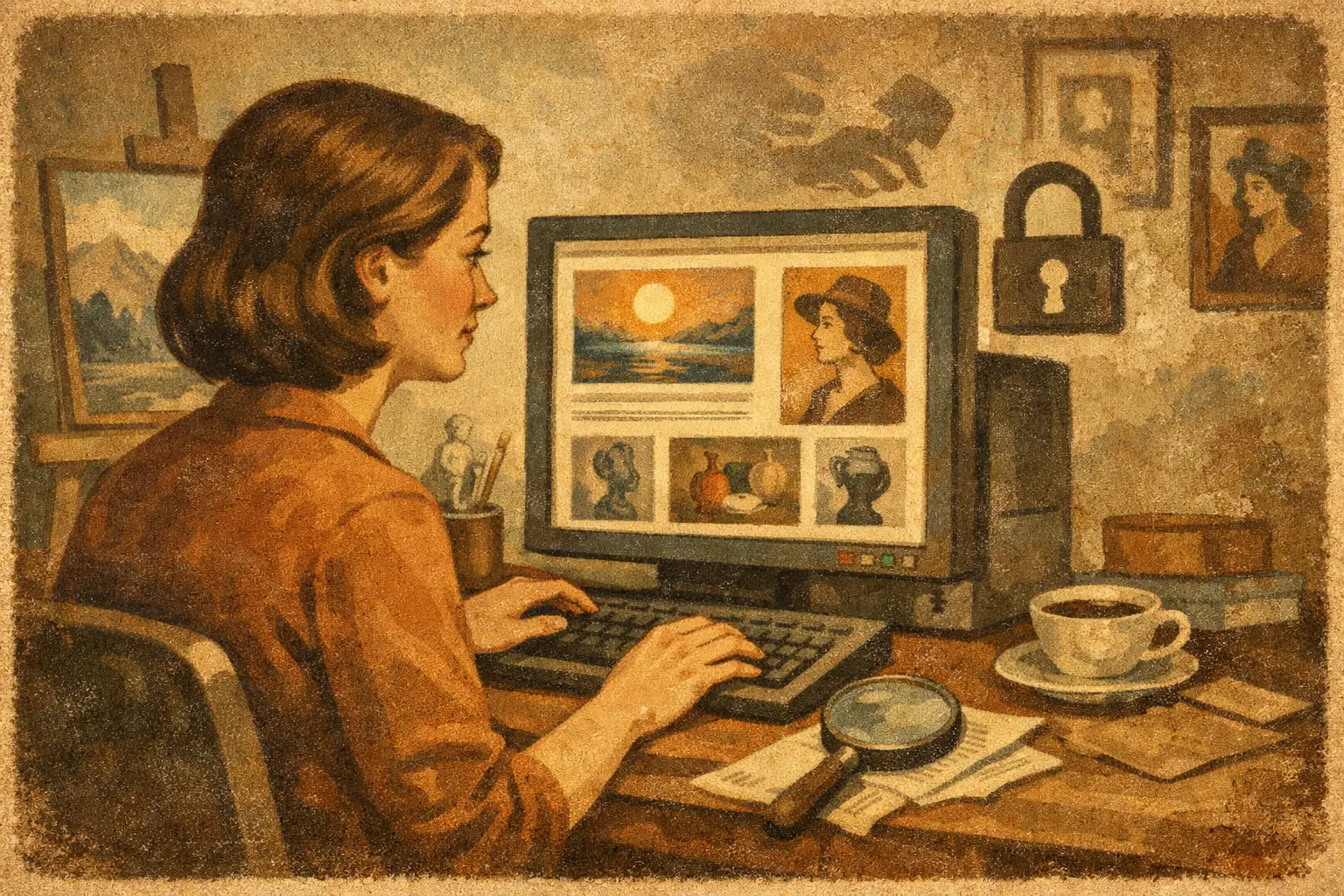
The first red flag in online art buying is rarely the artwork itself. It is the feeling that something is being hidden – a missing artist story, vague materials, unclear dimensions, a price that seems detached from reality. If you are wondering how to buy art online safely, the answer begins with pace. Good collecting, like good design, benefits from attention.
Buying art online can be deeply rewarding. It opens access to artists, editions, and visual worlds that may never appear in a local gallery. It also asks you to make a decision without standing in front of the piece, seeing the surface catch light, or sensing its scale in a room. That distance changes how trust is built. The safest purchase is not just protected by secure payment. It is supported by clear information, thoughtful presentation, and a seller willing to answer precise questions without hesitation.
How to buy art online safely starts with the seller
Before you study the artwork, study the gallery or platform. A credible art seller does not need to overstate legitimacy. You should be able to find a coherent point of view, consistent product details, transparent policies, and a visible standard of presentation. If every work feels generic, every description sounds interchangeable, or the artist information is thin, caution is reasonable.
A trustworthy online gallery usually makes its values easy to read. That can mean a curatorial identity, a clear distinction between originals and prints, accurate production language, and straightforward customer service terms. Museum-quality Giclée prints, for example, should be described with specificity, not as a vague luxury promise. Materials, edition status, framing details, and production methods matter because they tell you what you are actually buying.
Reviews can help, but they are not the whole picture. A polished website with generic testimonials is less convincing than consistent detail across the entire buying experience. Look at the return policy, shipping language, and how clearly the seller explains condition, authenticity, and fulfillment timelines. Safe buying often comes down to whether the gallery behaves like a careful steward of art rather than a quick reseller of images.
Read the artwork listing like a collector, not a browser
One of the easiest ways to avoid disappointment is to slow down when reading the listing. Beautiful images can create emotional certainty before practical certainty exists. A strong listing should answer the questions you would ask in person.
Start with the basics: Is the work an original, a limited edition, an open edition, or a framed digital print? Those categories carry different value, rarity, and pricing logic. None is inherently better for every buyer. An original offers singular presence. A limited edition can balance collectibility and accessibility. An open edition may suit purely decorative goals. What matters is that the listing names the format clearly.
Then look for dimensions, materials, and framing information. Scale is where many online purchases go wrong. A piece that feels commanding on a screen may arrive much smaller than expected. If the seller provides room views, treat them as helpful but not definitive. Styled images are often adjusted for visual clarity. Rely on the listed measurements first.
Surface and finish also deserve attention. Canvas, fine art paper, deckled edges, matte glazing, float frames, and archival inks all affect the final presence of a work. If those details are absent, ask. Art is not a standard consumer product. Material truth is part of its value.
Originals, prints, and editions are not interchangeable
Buyers new to collecting sometimes focus on image alone. Experienced buyers know that format shapes both meaning and price. An original carries the artist’s direct hand, along with the subtle irregularities that make a piece feel alive. A Giclée print can offer extraordinary fidelity and museum-level quality when produced well, but it should not be presented as if it were an original painting.
Limited editions introduce another layer. The edition size, signature method, and certificate details affect collectibility. A small signed edition usually commands more confidence than a large edition with unclear documentation. If scarcity is part of the appeal, the seller should explain exactly how that scarcity is structured.
Authenticity should be stated, not implied
If you want to know how to buy art online safely, ask one simple question: what proof accompanies the work? The answer will vary by medium, but it should exist.
For original works, that may be a certificate of authenticity, an invoice with full artwork details, the artist’s signature, or direct gallery provenance. For editions, it may include edition number, artist signature, stamp, or documentation from the publisher or gallery. The important thing is consistency. The paperwork should match the listing exactly in title, dimensions, medium, and edition status.
Be wary of language that gestures toward authenticity without confirming it. Phrases like “inspired by,” “gallery style,” or “signed print” can mean very different things depending on context. If the listing is imprecise, ask for clarity in writing before you purchase. A serious seller will not find that request inconvenient.
Ask questions that reveal the truth
The safest buyers are often the calmest ones. You do not need to interrogate a gallery, but you should ask enough to understand what is being offered. Good questions include whether the work comes with a certificate, how the edition is controlled, whether framing is archival, and how the piece is packed for transit.
The quality of the reply matters as much as the reply itself. Clear, direct answers signal competence. Evasive language, pressure to purchase quickly, or irritation at basic questions usually signal the opposite.
Price should feel explainable
Art pricing is not always simple, but it should not feel mysterious. A work may be expensive because it is original, part of a small edition, framed with archival materials, or made by an artist with an established market. A very low price is not always a bargain. Sometimes it reflects weak production, unclear rights, or work with little documentation behind it.
Compare similar pieces within the seller’s own catalog first. Do prices follow a pattern based on size, medium, and edition type? Then consider the broader context. A limited edition print with museum-quality production and careful framing should not be priced like a mass-market poster. At the same time, inflated language should not substitute for real value.
If you are furnishing a home, designing a hospitality space, or beginning a personal collection, the right purchase is often the one whose price aligns with both your budget and your long-term relationship to the piece. Safe buying includes financial clarity. You should know what you are paying for.
Secure payment and shipping are part of the artwork experience
A secure checkout matters, but so does everything around it. Reputable galleries use established payment methods, state taxes and shipping costs clearly, and avoid unusual requests such as wire transfers to unfamiliar parties unless there is a well-documented business reason.
Shipping deserves special attention because art is vulnerable in transit. Look for details about packaging, insurance, tracking, and handling time. Framed works require different protection than unframed prints. Originals on canvas need different care than works on paper under glass. If the seller ships internationally, customs and duties should not come as a surprise after purchase.
Damage policies should also be easy to find. The best sellers explain what happens if a piece arrives damaged, delayed, or materially different from the listing. This is not a small operational detail. It is part of trust.
Buy for your space, not just your screen
Safety in art buying is not only about fraud prevention. It is also about avoiding the quiet regret of a piece that never settles into the room. Art online often looks luminous in isolation, but interiors ask for relationship – with light, architecture, texture, and mood.
Measure the wall. Consider ceiling height, viewing distance, and what else lives nearby. A serene abstract in a wabi-sabi interior may need breathing room, while a denser composition can hold its own among books, objects, and layered materials. If you are choosing for a bedroom, entry, or hospitality setting, think about emotional temperature as much as palette.
This is where a curated gallery becomes especially valuable. A thoughtful seller does more than display inventory. It helps you understand why a work belongs somewhere, what atmosphere it creates, and how material and scale shape that effect. Taygeta Gallery approaches art this way – not as generic wall coverage, but as a quiet force within a space.
How to buy art online safely without losing the joy
The goal is not to become suspicious of every online art purchase. It is to become discerning enough that trust has substance. Safe buying is a blend of intuition and evidence: the emotional recognition that a work belongs with you, supported by clear documentation, transparent policies, and a seller whose standards are visible.
Art asks for a different kind of attention than most things we buy online. It stays in view. It changes a room’s rhythm. It can mark a season of life, or make stillness easier to inhabit. So take your time, ask the unglamorous questions, and let beauty earn your confidence before it earns its place on your wall.
Leave a Reply