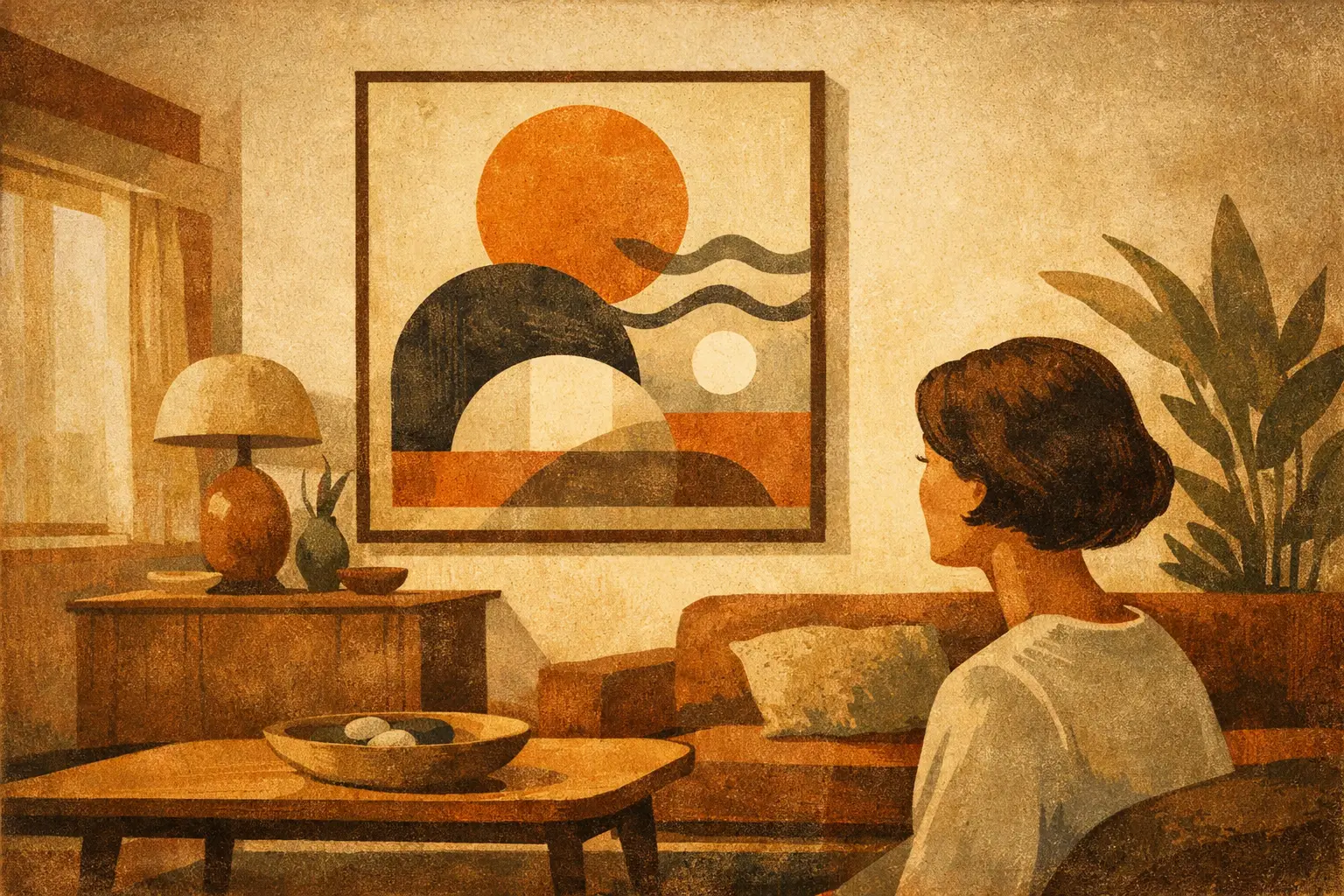
A room can be beautifully furnished and still feel unsettled. The sofa is right, the lighting is considered, the palette is restrained – yet something in the atmosphere remains incomplete. Often, that missing element is not another object but a visual presence that quiets the space. Zen inspired abstract wall art does exactly that. It brings form, silence, and emotional weight into an interior without asking for excess.
This kind of work is often misunderstood as simply minimal art in muted tones. In reality, its appeal runs deeper. It draws from ideas of balance, emptiness, impermanence, and natural rhythm, translating them into contemporary visual language. For homeowners, collectors, and designers, that means art that does more than match a room. It recalibrates how the room feels.
What makes zen inspired abstract wall art distinct
Zen-influenced abstraction is not defined by one style, one palette, or one technique. It may appear as a field of softened neutrals, a gestural ink-like movement, a fractured form with spacious composition, or a textured surface that suggests erosion, weather, or breath. What unites these works is restraint with intention.
Unlike decorative art that fills a blank wall with pattern or color, zen inspired abstract wall art tends to honor space as much as mark-making. Negative space is not treated as absence. It becomes part of the composition, allowing the eye to rest and the mind to slow down. That quality is especially powerful in contemporary interiors, where people are often trying to reduce visual noise rather than add to it.
There is also a philosophical dimension that gives the work substance. Zen aesthetics have long valued asymmetry, simplicity, and the beauty of the incomplete. In abstract art, those principles can appear through imperfect edges, irregular balance, softened geometry, or tonal subtlety. The result is work that feels composed but not rigid, refined but not sterile.
Why this art works so well in modern interiors
Many contemporary spaces struggle with a quiet tension. They are edited, polished, and functional, yet they risk feeling emotionally distant. Abstract art with a Zen sensibility helps correct that. It introduces atmosphere without clutter and depth without heaviness.
In a minimal apartment, a well-chosen piece can prevent the room from becoming cold. In a layered interior with wood, linen, stone, and handmade ceramics, it can strengthen an existing sense of calm. In hospitality or commercial settings, it creates a visual rhythm that guests feel before they consciously register it.
What makes this particularly valuable is its flexibility. A figurative work often sets a very specific narrative. Zen-influenced abstraction leaves more room for interpretation, which means it can live comfortably with evolving interiors and changing tastes. It does not overexplain itself. It stays open.
That openness matters when buying art for long-term use. Trends move quickly. Interiors shift. People relocate, renovate, and refine their preferences. Work rooted in stillness, balance, and material sensitivity tends to outlast trend-driven decor because its effect is experiential rather than fashionable.
The emotional effect of abstraction with a Zen sensibility
Good art changes the visual structure of a room. Great art changes your relationship to the room. This is where Zen-influenced abstraction has unusual strength.
A spacious composition can make a compact room feel less compressed. Soft mineral tones can lower the intensity of a bright, overstimulated environment. A single dark gesture across a pale ground can create focus and gravity in a room that otherwise drifts. These are subtle interventions, but they are not minor.
People often speak about wanting a home to feel calm, but calm is not created by removing everything. It is created through proportion, pacing, and visual coherence. Art plays a central role in that process because it directs attention. When the work carries a sense of quiet confidence, the room follows.
This is also why zen inspired abstract wall art appeals to buyers who want meaning without obvious symbolism. It does not need a literal landscape, a recognizable figure, or a written message to communicate peace. Its language is slower and more intuitive. For many collectors, that makes the connection feel more personal.
How to choose the right piece for your space
The first question is not which color you need. It is what kind of feeling the room is missing.
If the space feels restless, look for compositions with generous negative space, soft tonal transitions, or minimal gestural movement. If it feels too flat or anonymous, consider a work with more texture, layered surfaces, or stronger contrast. If the room is already full of tactile materials, a quieter composition may create the necessary pause.
Scale matters just as much as imagery. Small pieces can be intimate and meditative, especially in reading corners, bedrooms, or narrow transitional areas. Larger works have a different role. They establish emotional weather. In a living room, dining area, lobby, or primary bedroom, a larger abstract piece can anchor the entire environment.
There is also the question of palette. Neutral does not always mean warm, and calm does not always mean pale. Some spaces benefit from chalky whites, sand, taupe, and stone. Others need charcoal, umber, deep indigo, or moss to create stillness with depth. Zen aesthetics are not limited to beige restraint. They can be moody, elemental, and profoundly grounded.
Material presence should not be overlooked either. A museum-quality Giclée print with exceptional tonal detail can preserve softness and nuance beautifully, while framed digital art can bring precision and contemporary clarity. Original works or collector editions may offer a stronger sense of singularity. The right choice depends on budget, context, and whether the art is being sourced for a private residence, a design project, or a larger hospitality setting.
Styling without losing the stillness
This category of art asks for thoughtful placement. It does not need elaborate staging, but it does benefit from breathing room.
When hung above a sofa, console, or bed, the work should feel integrated rather than squeezed between competing objects. Let the wall carry some emptiness around it. That emptiness is part of the experience, just as it is within the composition itself.
Frame choice also shapes the mood. Thin natural wood can emphasize warmth and material honesty. Black frames can sharpen the work and bring a more architectural presence. Floating presentations often suit abstract compositions with textural sensitivity. What matters is that the frame supports the visual language rather than overpowering it.
Styling around the piece should remain intentional. Ceramics, stone, linen, raw wood, and diffused light tend to pair naturally with Zen-influenced abstraction because they share a tactile, grounded sensibility. But contrast can work as well. In a more urban or modernist interior, this kind of art can soften hard edges and polished surfaces.
Not every “Zen” artwork feels authentic
This is where discernment matters. The market is crowded with mass-produced pieces labeled “Zen” simply because they use beige tones, brushstroke motifs, or stacked stone imagery. Visual shorthand is easy. Genuine atmosphere is harder.
Authentic-feeling work usually carries a stronger sense of composition and intention. The surface has depth. The spacing feels considered. The marks do not look copied from a trend board. Even when the work is digitally produced or printed, it should retain conceptual clarity and material richness.
For buyers investing in art rather than temporary decor, quality is not only about paper, framing, or print resolution, though those things matter. It is also about whether the work can hold attention over time. A strong piece reveals more the longer you live with it. It does not exhaust itself in a week.
That curatorial difference is part of what makes a gallery context valuable. At Taygeta Gallery, the dialogue between Zen philosophy, contemporary abstraction, and interior atmosphere is treated as more than a style category. It is approached as a way of living with art.
Why it continues to resonate
The lasting appeal of this work comes from how well it answers a cultural need. People are not only decorating rooms. They are trying to build refuge, clarity, and emotional texture within daily life. Art that embodies stillness without cliché speaks directly to that desire.
It also respects the intelligence of the viewer. It does not force a mood. It offers one. That distinction gives the work dignity, and it gives the buyer space to form a genuine relationship with it.
A good room should not press in on you. It should allow you to arrive more fully within yourself. When art can do that quietly, without spectacle, it becomes more than a finishing touch. It becomes part of the room’s inner architecture.
If you are choosing slowly, that is a good sign. The right piece of zen inspired abstract wall art should not only suit your wall. It should leave a little more air in your day.
Leave a Reply