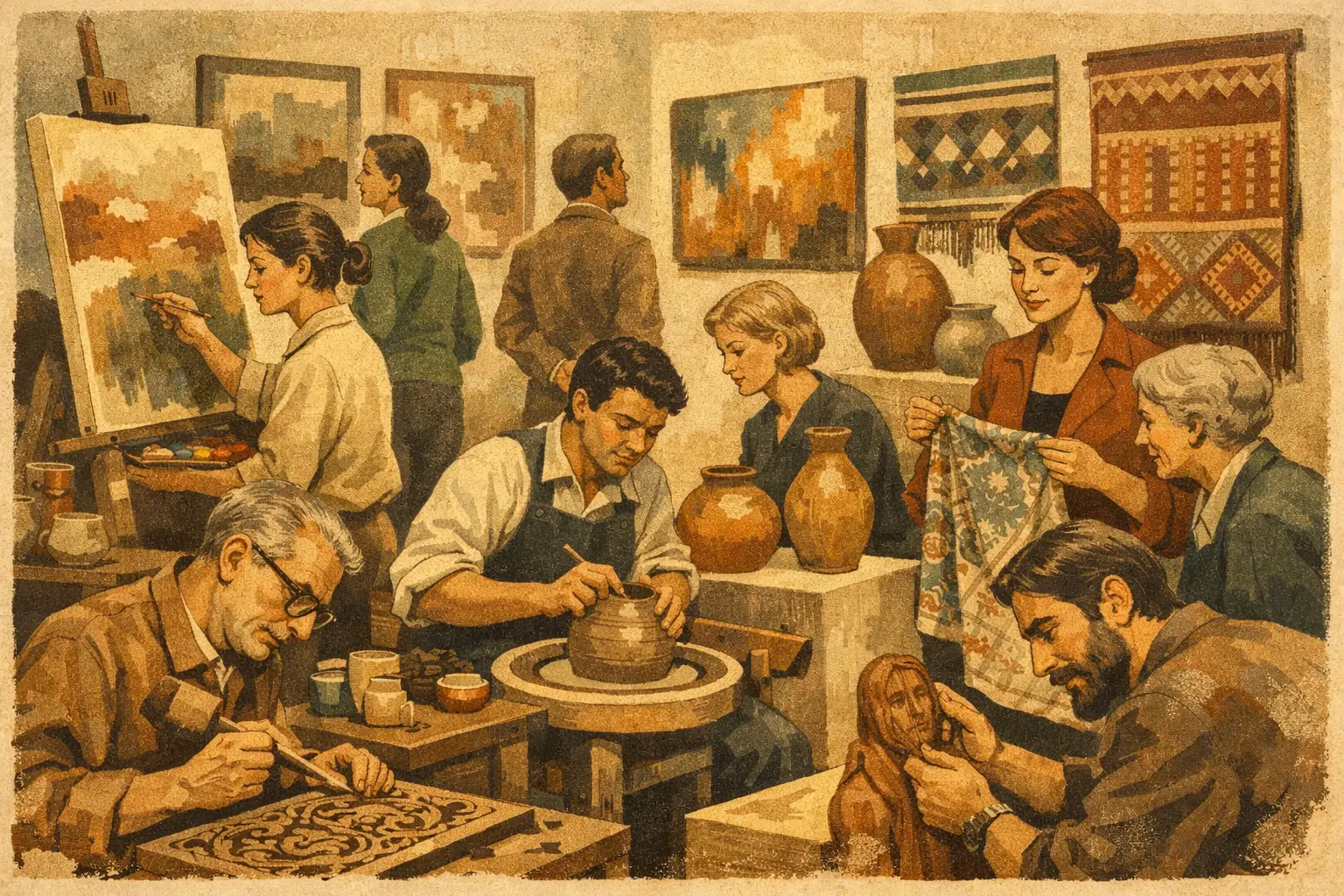
A painting can feel centuries old and unmistakably current at the same time. That tension is often where the most memorable work lives. If you have ever paused in front of a piece and wondered what is contemporary traditional art, the short answer is this: it is art made in the present using inherited techniques, visual languages, or cultural lineages, but shaped by a modern sensibility.
That definition matters because the category is often misunderstood. Some assume “traditional” means conservative or nostalgic. Others hear “contemporary” and expect conceptual work detached from craft. Contemporary traditional art sits between those assumptions. It honors continuity without becoming frozen in it.
What Is Contemporary Traditional Art in Practice?
Contemporary traditional art refers to work created by living or recent artists who engage with established artistic traditions while speaking to present-day life, taste, and thought. The tradition may be technical, such as oil painting, ink brushwork, woodblock printing, calligraphy, fresco-inspired surface treatment, or figurative drawing. It may also be cultural, rooted in regional symbolism, spiritual philosophy, craft lineage, or historical composition.
What makes it contemporary is not simply the date on the signature. It is the artist’s position in time. The work may reinterpret old forms, reduce them, fracture them, hybridize them with abstraction, or place them in dialogue with current questions about identity, place, memory, material, and meaning.
A good example is an artist using classical sumi ink methods to create spare abstract fields suited to a modern interior. Another might paint portraits with Old Master discipline but bring in contemporary psychology, fashion, or multicultural symbolism. The structure of the work carries memory. The feeling of the work belongs to now.
Why the Term Can Feel Contradictory
At first glance, the phrase seems to pull in two directions. “Contemporary” suggests the present moment. “Traditional” suggests continuity with the past. But in art, these are not opposites. Tradition is not a museum case. It is a living vocabulary.
Every serious tradition survives by adaptation. If it cannot absorb new realities, it becomes imitation instead of art. Contemporary traditional artists understand this instinctively. They do not copy historical forms just to preserve them. They use those forms because they still hold expressive power.
This is why the category often feels so resonant in carefully designed spaces. It carries the calm authority of craft and the freshness of contemporary vision. For collectors and designers, that balance can be deeply appealing. The work feels grounded, but never stale.
The Core Traits of Contemporary Traditional Art
There is no single look that defines the category, but certain qualities appear again and again.
The first is technical inheritance. The artist works with methods that have a lineage, whether academic, regional, spiritual, or craft-based. Brush discipline, compositional structure, pigment handling, textile processes, ceramic firing, icon painting, and printmaking traditions can all belong here.
The second is reinterpretation. The artist is not merely reproducing the past. Something shifts. Scale changes. Subject matter becomes modern. Negative space becomes more pronounced. Symbolism is edited. Materials evolve. Digital tools may even enter the process, provided the underlying language still carries a traditional sensibility.
The third is cultural awareness. The strongest work in this category understands where its visual language comes from. It does not borrow carelessly. It knows the weight of motif, gesture, and reference.
The fourth is relevance to the present. That relevance may be emotional rather than political. A painting does not need to announce a current event to feel contemporary. It may simply express today’s desire for stillness, fragmentation, intimacy, or belonging.
Contemporary Traditional Art vs. Traditional Art
Traditional art, in the stricter sense, often refers to work that remains closely bound to established rules, subjects, and methods. In some cases, that means devotional iconography, folk forms, court painting, inherited decorative systems, or academic realism practiced within stable conventions.
Contemporary traditional art begins with respect for those conventions, but it allows the artist more freedom. A miniature painter may enlarge the format and isolate a single motif. A ceramic artist may preserve historical glaze knowledge while simplifying form for a modern architectural setting. A figurative painter may keep classical anatomy and chiaroscuro yet strip away narrative detail.
The difference is subtle but important. Traditional art tends to preserve. Contemporary traditional art interprets.
Contemporary Traditional Art vs. Contemporary Art
This distinction can be just as useful. Contemporary art is a broad umbrella that includes installation, conceptual practice, digital media, abstraction, social critique, performance, and far more. Much of it is not tied to historical craft traditions in any visible way.
Contemporary traditional art is narrower. It keeps one foot in lineage. Material knowledge matters. So does disciplined form. Even when the result feels minimal or experimental, there is often an underlying structure that comes from long-established practice.
That does not make it more authentic than other contemporary art. It simply places value in a different area. For some collectors, the appeal lies in visible craftsmanship. For others, it is the way historical continuity gives a work depth and patience.
Why Collectors and Designers Are Drawn to It
There is a reason this category has such quiet staying power in interiors. It offers atmosphere as much as image.
In a home, contemporary traditional art can soften the sharpness of a purely modern room. It introduces age, tactility, and reflection without forcing a historic look. In hospitality or design projects, it creates a sense of cultural richness and emotional grounding. The space feels considered rather than merely styled.
This is especially true when the work draws from philosophies of restraint, impermanence, and harmony. A piece shaped by Eastern aesthetics, for example, may use emptiness as actively as form. It can bring visual rest to a room full of noise. That is not a minor quality. For many buyers, calm is part of the brief.
There is also a practical advantage. Contemporary traditional art tends to live well over time. Because it is anchored in enduring visual language, it often resists trend fatigue better than highly fashionable decor art. That does not mean every piece is timeless. It means the strongest ones usually reveal more with repeated viewing.
What to Look for When Evaluating a Piece
If you are considering a work in this category, start with the basics of quality. Ask whether the technique feels assured. Even highly reduced or abstract work should show intentional handling, not vagueness hiding behind mood.
Then look at the relationship between tradition and innovation. Is the work doing something with its source material, or only borrowing its surface? This is where nuance matters. A piece can be visually beautiful and still feel thin if its references are decorative rather than understood.
Scale and setting matter too. Some contemporary traditional works have an intimate, meditative presence best suited to private rooms. Others carry enough structural force for entryways, dining areas, or hospitality settings. The best choice depends on how you want the room to feel, not only how the piece looks in isolation.
For newer collectors, prints and limited editions can be an excellent entry point, especially when production quality respects the original work. Museum-quality reproduction does not replace the aura of a one-of-one piece, but it can make a sophisticated visual language more accessible. What matters is integrity of image, material, and presentation.
A Living Category, Not a Fixed Label
One reason the term remains useful is that it leaves room for evolution. Contemporary traditional art can include figurative painting, abstract ink work, ceramics, textile-based practice, digital compositions shaped by classical principles, and more. The category is not fixed by medium. It is defined by relationship.
That relationship is between inheritance and invention, memory and presence, discipline and freedom. When it works, you can feel all of that without needing the wall text.
For a gallery like Taygeta Gallery, this conversation is especially relevant because many collectors today are not looking for spectacle alone. They want work that brings stillness, cultural depth, and visual intelligence into the spaces where they live. Contemporary traditional art answers that desire with unusual grace.
The next time a work feels both familiar and newly alive, trust that response. Often, that is where tradition has stopped repeating itself and started breathing again.
Leave a Reply