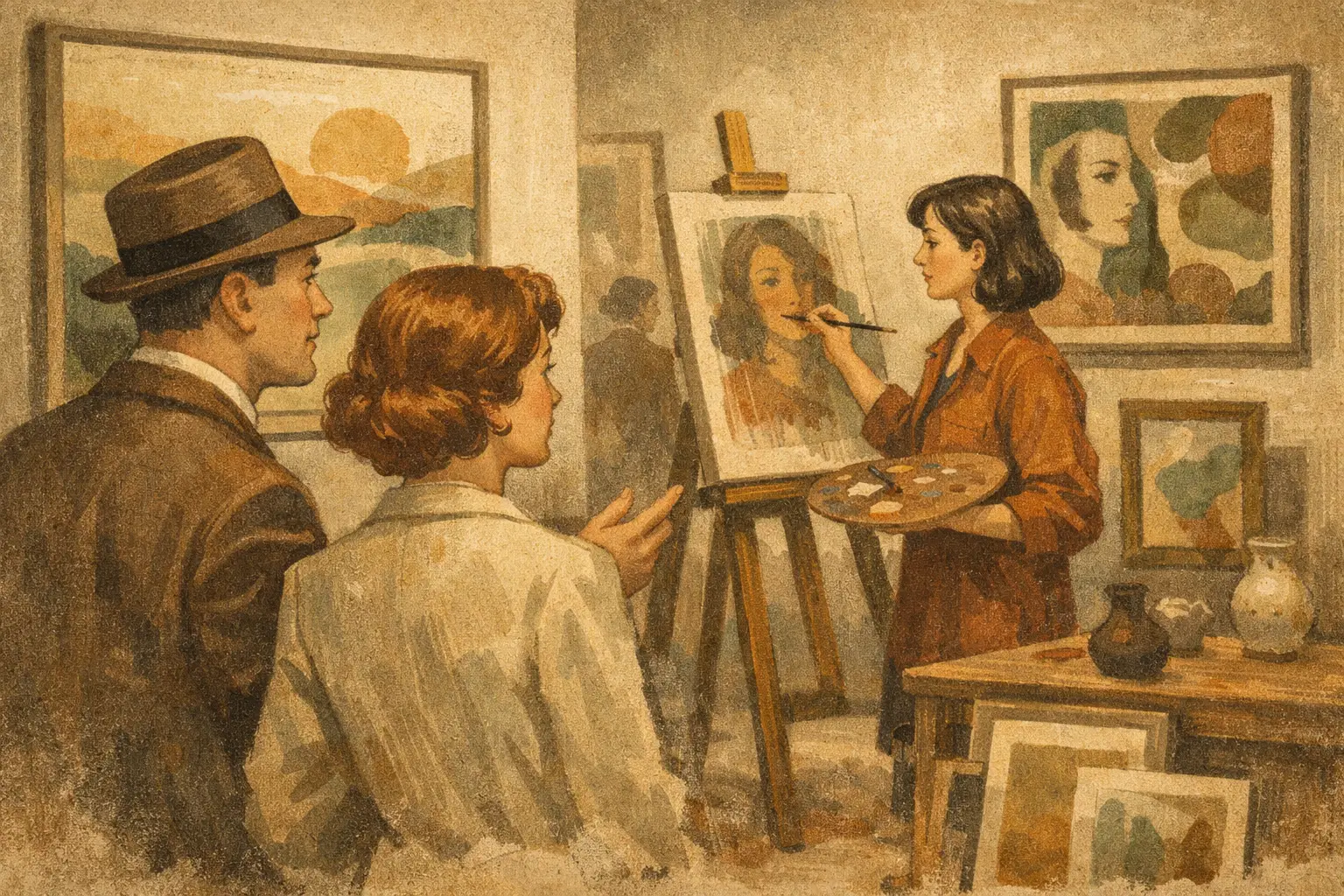
A first work by an emerging artist can change the emotional temperature of a room. It may be a small painting above a reading chair, a limited edition print that gives a quiet hallway its center of gravity, or an unexpected image that continues to reveal itself after months of looking. Learning how to collect emerging artists begins there: not with the pressure to predict the market, but with attention to the work that stays with you.
Emerging art invites a more personal form of collecting. You are often meeting an artist while their visual language is still in motion, before their practice has been reduced to a familiar signature or a price category. That proximity can be exhilarating. It also asks for discernment, patience, and a willingness to choose with your own eye.
Begin with the work, not the future value
The most durable reason to acquire art is that you want to live with it. Market recognition can follow, but it is uncertain by nature. A collector who buys only in anticipation of resale can miss the deeper reward: forming a relationship with an image, material, or idea that gives a space more character over time.
Start by noticing your genuine responses. Are you drawn to spare compositions, layered abstractions, uncanny figurative scenes, or work shaped by memory and place? Perhaps you return to weathered surfaces and imperfect forms that carry a Wabi-Sabi sensibility. Perhaps bold color and surreal tension feel more truthful to your home. Repetition in your attention is not a limitation. It is the beginning of a collection with coherence.
Give yourself permission to look slowly. Save images that remain compelling after the first flash of novelty, then compare them a week later. Ask what holds your attention: the formal balance, the subject, the emotional atmosphere, or the way the work might converse with the architecture and light of your room. Taste becomes clearer through this kind of return.
How to collect emerging artists with a clear point of view
A clear point of view does not require a rigid rule. It can be as simple as collecting works that explore stillness, displacement, the natural world, or contemporary identity. It may be connected to a medium, such as printmaking, photography, or digital art, or to a palette that creates continuity across different rooms.
The advantage of a loose collecting focus is practical as well as aesthetic. It helps you distinguish between a piece that is merely attractive and one that belongs in your evolving visual world. Yet avoid making the theme so narrow that every acquisition says the same thing. A thoughtful home benefits from contrast: a restrained abstract can make a charged figurative work feel even more alive.
Consider scale early. Large works can establish a room’s rhythm, while smaller works reward intimacy and invite grouping. If you are buying for a compact apartment, a carefully framed edition may offer more presence than an oversized canvas that overwhelms the wall. For a hospitality or design project, repetition in format can create calm, but each work should still have its own reason for being there.
Look for an artistic practice, not a single appealing image
One compelling work is a promising beginning. A sustained body of work is stronger evidence of an artist’s seriousness. Look beyond the image you first encountered and consider how the artist develops an idea across multiple pieces. Is there curiosity in the variations? Do material choices feel intentional? Can you recognize a sensibility without feeling that the artist is repeating a formula?
An emerging artist need not have a long exhibition history to be worth collecting. Early-career artists may be refining their voice through residencies, graduate programs, studio practice, online exhibitions, or independent projects. What matters is the evidence of commitment: a considered practice, a willingness to take formal risks, and a body of work that feels connected rather than accidental.
Context is useful, but it should not replace your response. Read the artist statement and exhibition text. Learn what questions shape the work. Then return to the artwork itself. If the language around a piece is persuasive but the piece does not hold your attention, wait. Conversely, if a work moves you before you can fully explain it, that is often worth taking seriously.
Ask the questions that protect your purchase
Collecting emerging art can be accessible, but accessible should never mean vague. Before purchasing, understand exactly what you are acquiring. A reputable gallery or artist should communicate this information plainly, especially when buying online.
For an original artwork, ask about the medium, dimensions, date, condition, signature, and any framing details. Confirm whether the work is unique and whether a certificate of authenticity is included. For works on paper, ask how the piece has been stored and whether it will be shipped flat or rolled. These details affect both presentation and long-term care.
For editions, clarity matters even more. A museum-quality Giclée print can be a meaningful collector acquisition when its production is transparent. Confirm the edition size, whether it is signed and numbered, the paper or substrate, pigment process, and whether artist proofs exist. A small edition is not automatically better, nor is a large edition inherently less beautiful. The key is that the edition is honestly described and professionally produced.
Keep a simple record for every acquisition. Save the invoice, certificate, artist information, edition details, installation photographs, and correspondence about condition or provenance. This archive becomes part of the work’s story. It is useful for insurance, future framing, relocation, and any eventual decision to sell or lend the piece.
Set a budget that leaves room for discovery
A budget creates freedom when it reflects your actual life. Decide what you can spend annually or seasonally, then reserve some portion for unexpected encounters. This keeps a single emotional purchase from closing the door on several smaller, meaningful works.
Price is shaped by more than artistic merit. Medium, scale, production costs, framing, edition size, gallery representation, and the artist’s career stage all matter. An original may be within reach at one moment and rise as demand grows, but collecting is not a race. A beautifully produced edition can be the right choice when you want to support an artist and bring a particular image into your home without stretching beyond comfort.
It also helps to account for the full cost of ownership. Framing, shipping, taxes, insurance, and installation can materially change the final figure. For international buyers, ask about customs and delivery arrangements before committing. Confidence comes from knowing the complete picture, not from finding the lowest initial price.
Buy with confidence, then live with the work
Online collecting asks you to translate a screen image into a physical experience. Review dimensions carefully, using painter’s tape on the wall if needed. Look for photographs that show texture, edges, framing, and the work in a room. Ask for additional images when color, scale, or surface detail is difficult to assess.
Once the work arrives, give it a considered place. Avoid direct sunlight, significant humidity, and heat sources. Framing is not simply a decorative afterthought: appropriate glazing, archival materials, and thoughtful proportions protect the work while allowing it to breathe within the room. A frame can make a print feel architectural, or let a delicate work on paper retain its quietness.
Most of all, resist the urge to fill every wall at once. A collection gains depth through pauses. Leave room for the next work that interrupts your expectations, the artist whose language you have not yet learned, and the piece that becomes more necessary with every return.
Leave a Reply