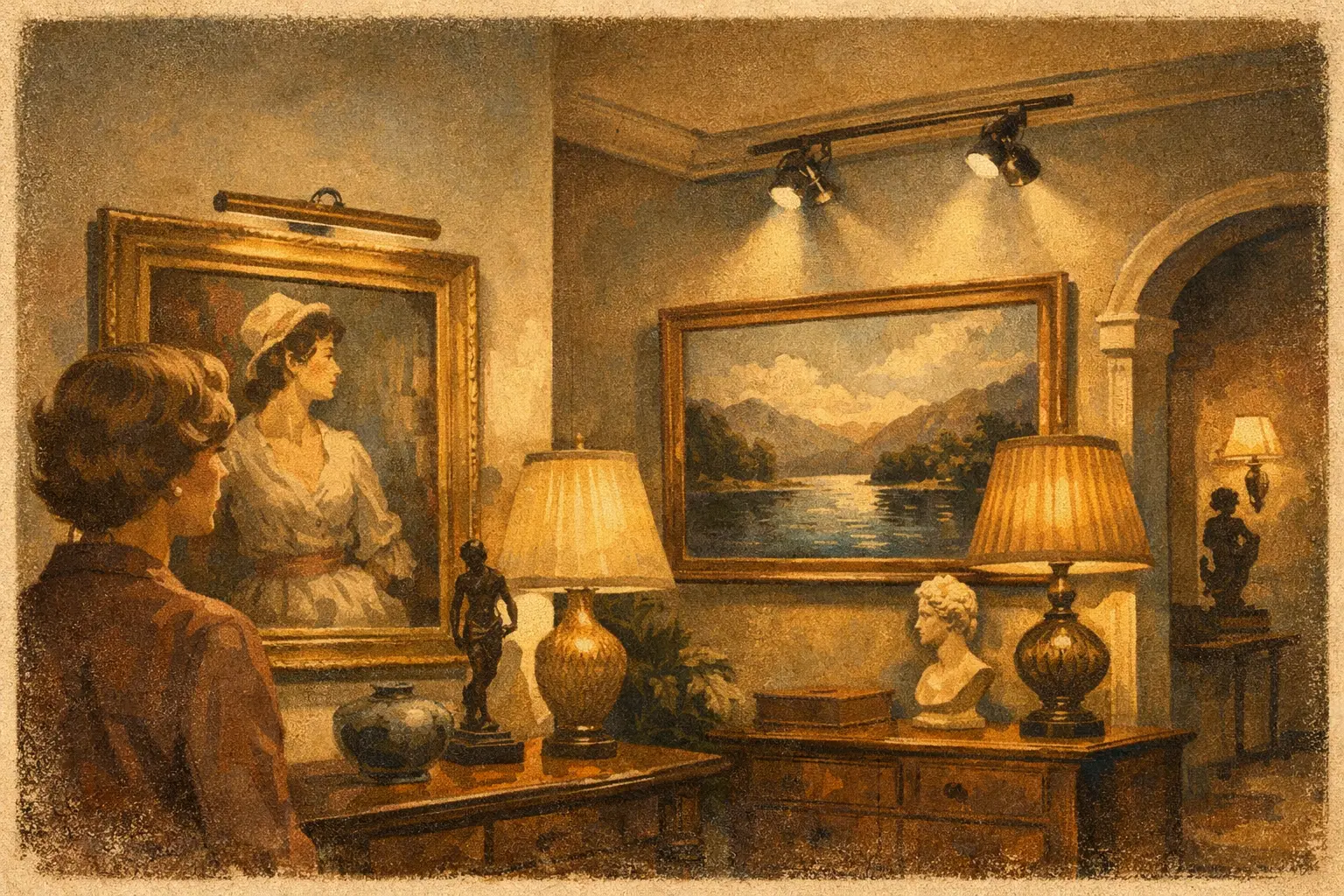
A work of art can be beautifully chosen, carefully framed, and still disappear after sunset. The best art lighting solutions do more than make an image visible. They reveal texture, preserve subtle color, give a room its evening rhythm, and allow a painting or print to hold its presence without dominating the space around it.
Lighting art is not simply a matter of brightness. It is a composition of distance, direction, color temperature, and restraint. The aim is not to turn a home into a showroom. It is to let the work feel quietly alive, as though the room has made space for it.
Begin With the Artwork, Not the Fixture
Every artwork asks for a slightly different kind of light. A richly textured oil painting may welcome a gentle angled beam that reveals its surface. A museum-quality Giclée print often benefits from even, diffused illumination that keeps the image clear without creating reflective glare. Sculpture needs a more spatial approach, where shadow becomes part of the viewing experience.
Before choosing a fixture, stand where the artwork will be seen most often. Notice daylight throughout the day, nearby lamps, glossy surfaces, and the wall color. A white wall can amplify brightness; a deep charcoal or clay-colored wall may absorb it, asking for a little more focused illumination. The right decision is rarely about the most powerful fixture. It is about the fixture that allows the work to feel balanced in its setting.
The Best Art Lighting Solutions by Space and Medium
Picture lights for intimacy and focus
A picture light is the most classic choice for framed paintings, drawings, and prints. Mounted directly above the frame, it creates an intimate pool of light and gives a work the ceremonial attention of a private gallery.
This approach is especially effective above a fireplace, console, bedside table, or in a quiet reading corner where one artwork carries the visual center. Choose a fixture roughly half to two-thirds the width of the frame, depending on the visual weight of the piece and the room. A very broad horizontal work may require two discreet lights or a different system entirely.
Picture lights are not ideal for every situation. Their close position can create uneven brightness on large pieces, while highly glazed frames may catch visible reflections. They also become part of the artwork’s silhouette, so the finish matters. A slim aged brass fixture can bring warmth to a serene landscape or Wabi-Sabi-inspired abstraction; matte black tends to recede beautifully in more architectural interiors.
Adjustable track lighting for evolving collections
For collectors, renters, and anyone who likes to rearrange a wall, adjustable track lighting is one of the most flexible solutions. Individual heads can be moved, aimed, and added as a collection grows. In a hallway, open-plan living room, or hospitality setting, it can illuminate several works without filling the ceiling with separate fixtures.
The quality of the heads matters more than the track itself. Look for adjustable beam angles and a high color rendering index, ideally 90 CRI or above. High-CRI light helps reds feel nuanced rather than flat, preserves the quiet variation in neutral palettes, and keeps deep blues, blacks, and layered digital tones from becoming muddy.
Track lighting can look too commercial when the fixtures are oversized, overly bright, or aimed indiscriminately. Keep the number of heads disciplined. A collection needs breathing room. Light the works that deserve attention, rather than treating every inch of wall as a display surface.
Recessed adjustable lights for a minimal ceiling line
Recessed adjustable fixtures are often the best art lighting solutions for interiors built around calm, clean lines. Their visual presence is minimal, making them particularly suited to contemporary homes, refined galleries, and spaces where the architecture should remain uncluttered.
A recessed light should be adjustable, not fixed. The beam must be directed toward the art at approximately a 30-degree angle from the wall. This is a useful starting point because it reduces the chance that the viewer will cast a shadow on the work while helping prevent harsh glare. It also gives enough angle to reveal a canvas surface without exaggerating every mark.
This option requires planning. Ceiling height, artwork placement, and wall depth all affect where fixtures should sit. If a room is still under renovation, consult a lighting designer or experienced electrician early. Moving a recessed fixture after the ceiling is finished is far less graceful than placing it well from the beginning.
Wall washing for large-scale art and quiet atmosphere
Wall washing uses a broad, soft distribution of light to illuminate a whole wall rather than one individual frame. It is especially compelling behind large abstract paintings, grouped editions, or a salon-style arrangement where the relationship between works matters as much as any single piece.
The effect is more atmospheric than theatrical. A softly lit wall can make a room feel spacious at night, allowing art to emerge gradually rather than appearing under hard spotlights. This is often a thoughtful choice for bedrooms, dining rooms, and reception spaces where visual comfort matters.
Wall washing is less precise than accent lighting. It may not suit a small, highly detailed work that needs distinct focus. Still, for a considered group of pieces, it offers a sense of visual continuity that individual spotlights cannot always provide.
Layered lighting for sculpture and dimensional work
Sculpture, ceramics, and textured reliefs need light that can create shadow. A single frontal source may make them appear flat. Instead, combine ambient room light with one or two soft directional sources from the side or above.
The shadows should feel descriptive, not dramatic for their own sake. A gentle sidelight can reveal the irregular edge of a ceramic form or the surface movement of a sculptural object. In this sense, lighting becomes a companion to the work’s material language: it makes form legible while leaving room for mystery.
Choose Light That Honors Color
For most homes, a warm-white LED between 2700K and 3000K creates the most inviting result. At 2700K, the light feels softer and more residential, especially with wood, linen, plaster, and warm metals. At 3000K, it becomes a little clearer and can suit contemporary interiors, white walls, and art with cooler or more saturated hues.
Avoid treating warmer light as automatically better. Very warm light can turn a crisp black-and-white print yellowish or mute icy blues and silvery grays. Conversely, light above 3500K can feel clinical in a living space, even when it renders color accurately. The desired mood of the room should guide the choice.
Dimming is equally valuable. Art looks different during a bright afternoon gathering than it does during a quiet dinner. A dimmer gives the room permission to change character, allowing the work to remain present without becoming visually insistent.
Protect the Work While You Illuminate It
Light is both revelation and exposure. Over time, excessive ultraviolet and high-energy visible light can contribute to fading, particularly in works on paper, photographs, textiles, watercolors, and certain pigments. Modern quality LEDs emit very little ultraviolet light and are generally preferable to older halogen systems, which produce more heat and require greater caution.
Sensitive works should not be placed in direct sun, even if they are beautifully framed. Consider UV-filtering glazing for works on paper, and keep lighting levels modest for delicate pieces. Conservation guidelines vary by medium and artist intent, so there is no universal brightness setting. When in doubt, use less light for longer periods rather than intense light all evening.
This restraint is not a compromise in beauty. It is part of collecting with care.
Placement Details That Change Everything
A few small decisions determine whether art lighting feels intentional. Keep fixtures far enough from the wall to cast an even beam across the work. Aim them so that the brightest point does not sit like a hot spot in the center of the composition. For glazed art, adjust both the fixture angle and the viewing angle until reflections recede.
If a picture light creates glare, a ceiling-mounted adjustable fixture may be the better choice. If track lighting makes a peaceful room feel busy, a single picture light or soft wall wash may restore quiet. There is no need to use one method throughout the home. A layered, responsive approach usually feels more natural.
At Taygeta Gallery, art is considered not only as an object to own, but as a presence that shapes the atmosphere around it. Lighting is part of that relationship. It can draw attention to an artwork’s stillness, deepen the tonal complexity of an abstract field, or give a limited edition print the composed clarity it deserves.
When the light is right, visitors may not immediately notice the fixture at all. They notice the work. They pause a little longer, see a color they had missed, and feel the room settle into harmony around it.
Leave a Reply