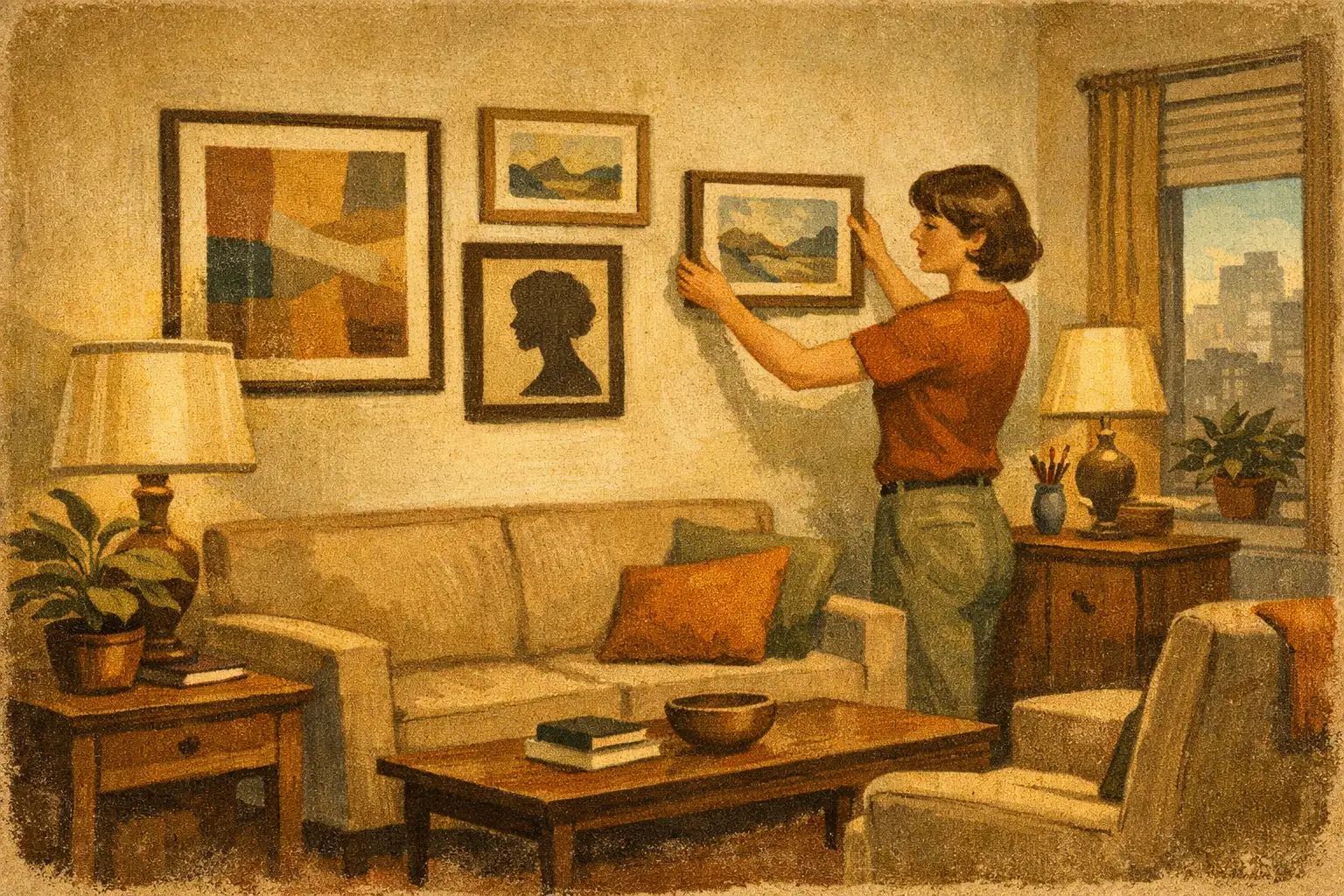
A small apartment tells the truth quickly. If a room feels crowded, one painting hung too high can make it feel even tighter. If the room feels unfinished, the right art placement in small apartments can bring proportion, calm, and identity without asking for more square footage.
The mistake is not choosing art that is too bold. It is treating art as an afterthought, added only once the furniture is in place. In compact interiors, artwork does more than decorate. It directs the eye, sets the rhythm of the room, and gives even modest architecture a sense of intention.
Why art placement in small apartments matters more
In a larger home, empty space can absorb small missteps. In a studio, one-bedroom, or compact city apartment, every visual decision carries more weight. Art can expand a room psychologically, but it can also compress it when scale, framing, or placement feel unresolved.
This is why restraint matters. Small apartments often benefit from fewer works chosen with more sensitivity. A single museum-quality print with breathing room around it can feel more luxurious than a crowded wall of unrelated pieces. The eye needs pauses. So does the room.
There is also an emotional dimension. Compact living asks more from every object. The pieces on your walls should not merely fill blank areas. They should create atmosphere – quiet, energy, memory, or depth – depending on how you want to live.
Start with the room, not the wall
Before deciding where art should hang, pay attention to how the room is actually used. A dining nook that also functions as a workspace needs a different visual tone than a bedroom corner meant for rest. Placement begins with mood.
If a room already carries visual complexity through shelving, textiles, or patterned rugs, the artwork may need to act as a point of stillness. In a sparse interior, art can provide structure and warmth. This is where thoughtful collecting differs from generic decorating. The work is not there to match the sofa. It is there to complete the spatial conversation.
A narrow entry, for instance, often responds well to vertical compositions that draw the eye upward. A low-backed sofa in a small living room usually benefits from a horizontal work or a balanced pair that echoes the furniture’s width. In a bedroom, softer imagery and lower contrast can prevent the wall from feeling visually restless.
Scale is the first decision
The most common hesitation in small homes is fear of going too large. Yet undersized art often makes a compact room feel more fragmented. A piece that is too small leaves the wall unresolved and can create the sense that everything is floating.
Larger art, used carefully, often brings the opposite effect. One substantial piece above a console or sofa can simplify the room and create visual depth. The key is proportionality. As a general instinct, artwork above furniture should occupy enough width to feel anchored, but not so much that it overpowers the piece below.
This is where framing matters. A refined frame can give modestly scaled work more presence without requiring a massive image area. Thin natural wood, soft black, or gallery-white frames tend to preserve clarity in smaller rooms. Heavy ornament usually asks for more architectural volume than a compact apartment can comfortably offer.
Height, spacing, and the discipline of negative space
Good placement is often less about the artwork itself and more about the air around it. Negative space is not emptiness. It is part of the composition of the room.
Hang work too high and the room starts to feel disconnected, as if the art has drifted away from daily life. Hang it too low and it can feel visually heavy. In most apartments, art should relate to furniture and sightlines rather than sit as an isolated object somewhere near the ceiling. The center of the piece should feel natural when you are seated as well as standing.
Spacing between works matters just as much. Tight spacing can create intimacy if the pieces belong together. Wider spacing allows each work to breathe and feel more deliberate. In small apartments, generous spacing often creates a calmer result than salon-style density, unless the entire room is intentionally maximal.
Use art to guide movement
Small apartments are often experienced in a single glance. From the entry, you may see the living area, kitchen, and a sliver of bedroom all at once. This makes placement especially powerful.
Artwork can guide the eye away from less elegant elements and toward moments of beauty. A luminous print at the end of a narrow hallway gives the space destination. A subtle composition in the dining area can soften the transition from kitchen to living room. In open-plan layouts, art helps define invisible zones without adding physical barriers.
There is a quiet sophistication in using artwork this way. It lets the room unfold rather than present itself all at once.
Best wall choices in compact interiors
Not every blank wall needs art, and not every good piece belongs in the main room. The strongest placements in small apartments are usually the ones that respect architecture, light, and routine.
Above a sofa remains a natural anchor, especially for one larger work or a tightly composed pair. Entry walls are valuable because they shape first impression. Hallways can hold smaller works if the pacing is measured. Bedrooms often benefit from a single contemplative piece rather than many competing images.
Leaning art can also work beautifully in small spaces, especially on a console, shelf, or low cabinet. It introduces softness and avoids over-filling the wall. This approach suits interiors influenced by Wabi-Sabi and Zen sensibilities, where slight asymmetry and quiet informality can feel more alive than strict perfection.
Still, leaning has trade-offs. It is best when the surface is stable and the room is not too visually busy. Otherwise, it can feel temporary rather than intentional.
Light changes the reading of art
Natural light can enlarge a room, but it also changes how artwork is perceived. In small apartments, where a single window may carry most of the daylight, the relationship between art and light is intimate.
A richly textured or high-contrast work can become dramatic in morning light and nearly disappear by evening if the placement is poor. Pieces with quieter tonal shifts often perform beautifully in bedrooms, reading corners, or shadowed walls where mood matters more than immediate impact.
If a room gets strong sun, glazing and print quality deserve attention. Museum-quality production is not only about finish. It is about preserving subtle color, depth, and longevity in real living conditions. This is one reason discerning buyers look for works that hold their presence beyond the screen.
Choosing fewer, better pieces
One of the most elegant approaches to art placement in small apartments is editing. Not every meaningful work needs to be displayed at once. Rotating pieces seasonally or by mood allows the home to stay fresh without visual excess.
This approach also supports more thoughtful collecting. Instead of filling every wall with quick purchases, live with one or two pieces that truly shift the atmosphere of the room. Notice how they feel at different hours. Notice whether they bring stillness, tension, expansiveness, or warmth. A good work does not just fit a wall. It alters your experience of being there.
For design-conscious buyers, this is often the difference between decoration and curation. A small apartment does not limit art collecting. It sharpens it.
When a gallery wall works – and when it does not
Gallery walls are often recommended for small homes, but they are not always the most refined answer. They work best when the collection has a clear internal logic – shared palette, related framing, or a deliberate contrast that feels authored rather than accidental.
In a compact room, a gallery wall can add richness, especially in transitional spaces like stair landings or hallways. But in a living room already carrying many functional elements, it may create more noise than character. If the apartment is your place of retreat, one resonant piece may serve you better than twelve small gestures.
At Taygeta Gallery, this is often where collectors respond most strongly to curatorial grouping. They are not only asking what looks good together. They are asking what kind of silence, movement, or emotional temperature they want the room to hold.
The most persuasive rooms are rarely the most crowded. They are the ones where every placement feels considered, and where art gives shape to life without overwhelming it. In a small apartment, that kind of balance is not a compromise. It is a form of refinement.
Leave a Reply