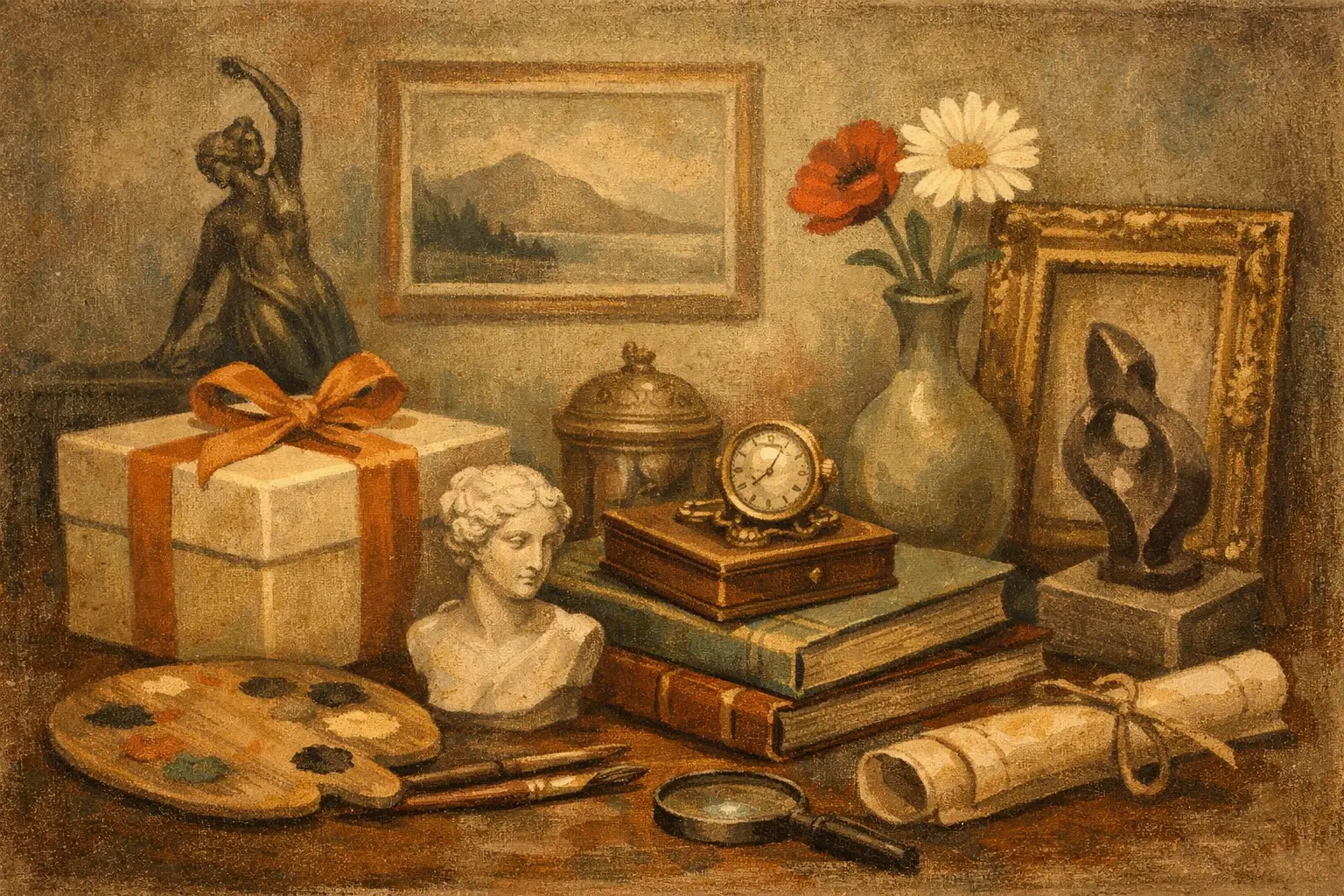
A gift can mark a date on the calendar, then quietly disappear into a drawer. Collector art gifts ask something more lasting of the gesture. They enter the recipient’s daily field of vision, alter the atmosphere of a room, and gather meaning through repetition. A well-chosen work is not simply something to own. It becomes a companion to a home, a memory made visible.
For the person who values thoughtful interiors, visual culture, and objects with a point of view, art offers a rare balance of intimacy and endurance. The most meaningful choice is rarely the loudest or most expensive piece. It is the work that feels attuned to a person’s inner landscape, their space, and the life they are making.
What Makes Collector Art Gifts Different?
Collector art gifts are chosen with attention to the artwork itself: its authorship, edition, material quality, visual language, and place within a larger artistic practice. This is what separates a considered art gift from decorative imagery selected only to fill an empty wall.
An original artwork carries the singular presence of the artist’s hand, whether through paint, collage, photography, or digital composition realized as a unique physical work. A limited edition offers a different but equally compelling form of ownership. Its value lies in a defined number of authorized impressions, often signed or accompanied by clear edition information. Museum-quality Giclée prints can make exceptional gifts as well, particularly when the image, paper, pigment, and framing have been chosen with care.
The distinction matters because the recipient is not only receiving an image. They are receiving a relationship to an artist’s vision. A quiet abstract may offer a place of rest after a long day. A surrealist composition can remain slightly elusive, revealing a new association each time it is seen. A work shaped by Wabi-Sabi may bring warmth to an otherwise polished interior through texture, incompletion, and the beauty of irregular forms.
Art does not need to arrive with the pressure of expertise. A first edition or a framed print can be a beginning rather than a final declaration of taste. The strongest gifts leave room for a collector’s eye to evolve.
Begin With the Recipient’s Way of Living
Choosing art for someone else requires observation more than certainty. Consider the rooms they return to, the colors they wear, the books they keep in reach, and the pace they seem to seek at home. Someone drawn to pale wood, linen, ceramics, and restrained forms may respond to meditative abstraction or an artwork with organic texture. A person who collects expressive objects, vintage furniture, and unexpected color may welcome a more theatrical work with tension and movement.
It is useful to think beyond a favorite color. Color matters, but atmosphere matters more. Does the recipient want their home to feel calm, energized, intimate, playful, contemplative, or slightly strange? Art is capable of holding these emotional registers without explaining them away.
There is also the question of scale. A small framed work can feel deeply personal on a bedside table, bookshelf, or narrow entry wall. A larger piece may become the visual center of a living room, dining space, or studio. If you do not know the dimensions of the intended wall, avoid guessing at an oversized statement piece. A smaller edition, an unframed work that allows the recipient to choose a frame, or a gift presented with an invitation to select the final format can be more considerate.
Choose a work, not a personality test
Avoid treating art as a rigid reflection of who someone already is. The best gifts can also offer a new possibility. A minimalist may be moved by a dense, dreamlike image. A confident collector may need a work of stillness. Taste is not fixed, and art can gently expand it.
The key is to choose with a sense of resonance rather than trying to decode the recipient completely. If a piece makes you think of the person with clarity and warmth, that instinct is often worth trusting.
Original, Limited Edition, or Fine Art Print?
Each format creates a different kind of gift experience. There is no universal hierarchy, only a question of intention, budget, and the recipient’s relationship to collecting.
An original work is especially fitting for a landmark occasion: a wedding, significant birthday, new home, major professional milestone, or a gift shared by several people. Its singularity gives the occasion a sense of permanence. Yet originality is not the only measure of emotional value. A small original may feel more intimate than a large canvas, while an edition by an artist the recipient genuinely admires can become a more meaningful acquisition than an original chosen without connection.
Limited editions suit recipients who appreciate rarity but may be building their collection gradually. Look for a clearly stated edition size and production method. A smaller edition generally offers greater scarcity, but the artwork should still be the reason for choosing it. Edition numbers alone do not create significance.
Museum-quality Giclée prints offer access to richly detailed work at a more approachable price point. They are particularly well suited to contemporary digital art, photographic work, and image-based compositions in which archival printing preserves nuance, tonal depth, and color. The quality of the print matters: pigment inks, archival paper or canvas, thoughtful color management, and professional framing allow the work to retain its presence over time.
At Taygeta Gallery, collector-oriented editions and museum-quality prints are approached as works with a visual life beyond the screen. This is essential when giving art online. The recipient should receive an object that feels intentional in the hand and convincing on the wall.
Let the Artwork Meet the Room Without Obeying It
A common hesitation is whether the artwork will match. This concern is understandable, but exact coordination can make a room feel overly managed. Art should converse with an interior, not disappear into it.
In a neutral space, a tonal piece can deepen the existing sense of calm, while a concentrated field of color can create a welcome point of energy. In a richly layered room, a quieter composition may provide visual breathing room. The relationship is often strongest when there is an element of contrast: rough texture against smooth surfaces, a dark image in a light room, a precise geometric form beside handmade ceramics.
Framing shapes this conversation. Natural oak, walnut, black, white, or a fine metal profile can shift an artwork’s character without changing the image itself. If the recipient has a defined interior style, a framed gift may feel complete and ready to inhabit the space. If their home is still evolving, an unframed print can offer welcome flexibility.
Do not overlook placement. A work given for a bedroom does not need to perform like a work for a lobby. Private spaces often invite images with softer emotional frequency, while communal rooms can carry bolder gestures and more complex visual narratives.
Give Context, Not Instructions
The presentation of an art gift can deepen its meaning. Include the artist’s name, title, medium, edition details where relevant, and a few words about why the work was chosen. This context is not a lecture. It is a small doorway into attention.
A note might mention the weathered stillness of the composition, the sense of freedom in its open forms, or the way its colors recalled a particular place or conversation. Leave the interpretation open. Art becomes personal when its meanings are allowed to change.
If the recipient is new to collecting, resist the urge to explain investment value too heavily. Art can hold financial value, especially when provenance, condition, edition, and artistic reputation are carefully documented, but a gift should not make the recipient feel responsible for a future market outcome. The first value is lived with: the pause it creates, the room it transforms, the thought it returns to.
A Gift With Time Inside It
The finest art gifts do not demand immediate understanding. They remain on the wall through changing seasons, changing furniture, and changing versions of the person who received them. What first felt beautiful may later feel consoling, challenging, or quietly familiar.
Choose a work that has enough stillness to stay, enough character to be remembered, and enough openness to keep offering itself. That is how a gift moves beyond the occasion and becomes part of someone’s life.
Leave a Reply