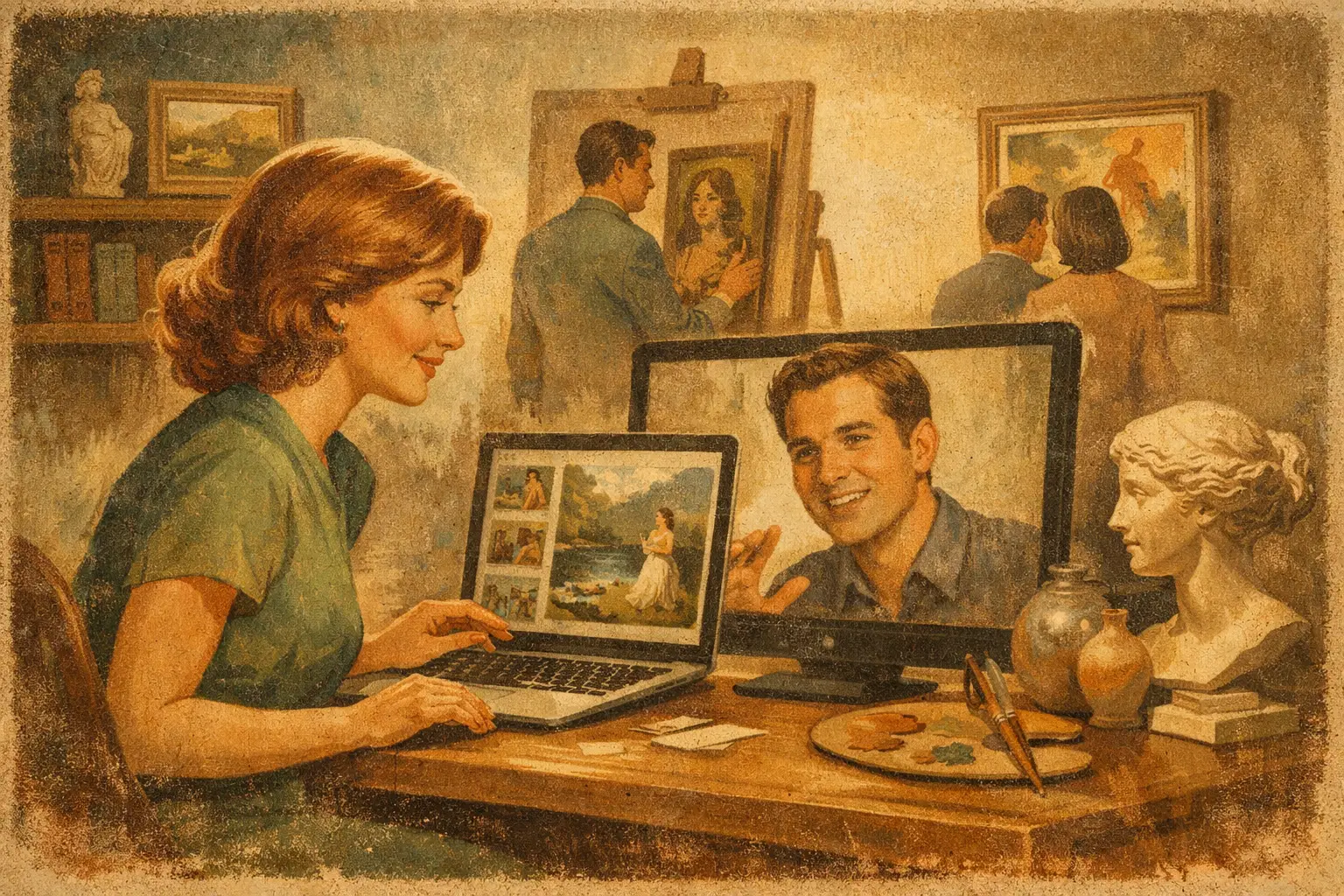
A wall is never only a wall. In a home, a hotel suite, or a carefully composed workplace, it becomes a field of attention: a place where color settles the room, an image changes the pace of thought, and personal taste becomes visible. The future of online art collecting will be shaped by this intimate reality. Technology may make discovering art faster, but the desire behind a meaningful acquisition remains beautifully slow.
Collectors are not simply looking for more images. They are looking for works that feel chosen rather than generated by a feed, credible rather than generic, and capable of living with them over time. For emerging buyers and seasoned design professionals alike, online collecting is moving away from endless browsing and toward a more considered relationship with art, artist, place, and material.
The Future of Online Art Collecting Begins With Discernment
For years, digital access has expanded the art market. A collector in Chicago can encounter an artist working in Seoul, while an interior designer sourcing for a coastal California residence can compare scale, palette, and framing without leaving the studio. This access is valuable, but abundance brings its own difficulty. When every platform offers thousands of works, selection becomes the real luxury.
The online galleries that matter will not behave like warehouses. They will offer a point of view. Curatorial context, thematic collections, artist stories, and thoughtful editing help a buyer understand why a work belongs in the room and why it matters beyond its surface appeal.
This does not mean every collector needs an art-history degree or a formal collection plan. Taste often begins with a quieter recognition: the pull of imperfect texture, a certain blue, an unresolved form, an image that makes a room feel less crowded. But confidence grows when instinct is met with clear information about edition size, process, provenance, paper, framing, and the artist’s intention.
In this sense, the future belongs to galleries that make art more approachable without flattening it into decoration. A museum-quality Giclée print can be an accessible entry point, yet it should still be presented as a work with material presence and artistic authorship. Price matters, certainly. So does the feeling that a piece has earned its place.
A Screen Cannot Replace Material Presence
Online buying will continue to improve through better photography, room-view tools, detailed videos, and clearer scale references. These are practical advances. They reduce uncertainty, especially for buyers investing in a large statement piece or specifying art for multiple rooms.
Still, art is not fully resolved on a screen. A monitor can show composition, but it cannot entirely convey the grain of fine art paper, the depth of pigment, the restraint of a matte finish, or the shadow cast by a frame at late afternoon. The most successful online art experiences will acknowledge this rather than pretend otherwise.
That honesty can take many forms: close visual details, accurate dimensions, frank descriptions of texture and finish, and production standards that respect the original work. It also means offering guidance that connects an artwork to the conditions of a real interior. A pale, contemplative abstraction may need breathing room. A dense surrealist image may become the room’s center of gravity. Scale is not merely a measurement. It is an emotional decision.
For design-oriented buyers, this is especially relevant. Art must work with natural light, architecture, textiles, and the lived rhythm of a space. The right work can soften a minimalist room without interrupting its calm. It can introduce tension into a neutral interior, or give a hospitality project a visual memory guests carry away. Digital tools can support these choices, but human visual judgment remains essential.
The return of the object
As digital imagery becomes more common, physical artworks may become more cherished. There is a growing distinction between seeing an image and owning an art object. A limited edition, signed work, archival print, or carefully framed digital artwork carries a degree of permanence that an endlessly copied image does not.
This does not make one format superior in every case. An original artwork may offer singularity and direct evidence of the artist’s hand. A limited edition may offer a more attainable path into collecting while preserving intentional scarcity. An open edition can be right for a large project with budget and consistency requirements. The question is not which format is universally best, but whether its value is explained with clarity.
Provenance Will Become Part of the Experience
Trust has always been central to collecting, and it becomes even more important when the relationship begins online. Buyers want to know what they are acquiring, who made it, how it was produced, and what will arrive at their door. This is not administrative detail. It is part of the artwork’s story.
In the years ahead, provenance will become more visible and more elegantly communicated. Certificates of authenticity, edition records, artist biographies, transparent production notes, and secure payment practices will be expected rather than treated as extras. For collectors, such details offer reassurance. For artists, they protect authorship and preserve the integrity of the work as it travels into new homes.
New technologies may assist with verification and record-keeping. Yet a digital certificate alone will not create trust. Buyers will still look for coherent gallery standards, truthful images, responsive service, and language that does not overpromise. The most enduring form of confidence is built through consistency.
There is also a deeper reason provenance matters. Collecting is a form of cultural participation. When a buyer understands the context of a work, they are not only acquiring an object for an interior. They are helping sustain an artist’s practice, a visual language, and a more diverse creative economy.
Smaller, More Personal Collections
The old image of collecting often suggests accumulation: crowded walls, inherited names, and a private archive held at a distance from daily life. Online collecting is making another model possible. Many people are building smaller collections with strong personal coherence, choosing works that correspond to a mood, a philosophy, or a particular way they want to inhabit their spaces.
A collector may be drawn to Wabi-Sabi because they value irregularity, weathered surfaces, and the relief of imperfection. Another may choose dreamlike figurative work as a counterpoint to an ordered home. These choices need not follow trends. In fact, the most resonant collections often resist the pressure to make every room look immediately recognizable online.
This shift favors art that rewards repeat viewing. It favors restraint over spectacle, though there will always be a place for bold work. It also invites buyers to let a collection evolve. A first print can lead to a limited edition. A work chosen for a bedroom can become the beginning of a larger conversation across a home, office, or project.
AI will raise the value of intention
Artificial intelligence will change how images are made, marketed, and encountered. It may offer artists new methods of experimentation, and it will almost certainly make visual abundance even more intense. But its presence will sharpen a question collectors already ask: what is the intention behind this work?
For some buyers, the answer will rest in traditional authorship and a clear human hand. For others, a digitally made or AI-assisted work may be compelling when the artist’s choices, concepts, and process are explicit. The distinction will depend on the work and the collector. What will matter most is transparency.
When almost any aesthetic can be simulated, curation becomes an act of care. The artist’s perspective, the edition’s integrity, and the gallery’s ability to articulate meaning will carry greater weight. A beautiful image may catch the eye. A work with authorship and emotional intelligence is more likely to stay with us.
The Best Digital Galleries Will Feel Less Transactional
The next chapter of online art collecting will not be defined by technology alone. It will be defined by whether technology creates more room for attention. The strongest galleries will combine practical ease – clear pricing, safe purchasing, thoughtful packaging, and worldwide delivery – with the slower pleasures of looking and learning.
They will make space for a buyer who knows exactly what they want and for one who only knows how they want a room to feel. They will support trade clients balancing timelines and specifications, while also welcoming someone choosing their first artwork above a dining table. Both deserve clarity. Both deserve art that feels considered.
A meaningful collection does not need to announce itself. It can begin with one work that brings stillness to a passing glance, then remain quietly present as the light changes around it.
Leave a Reply