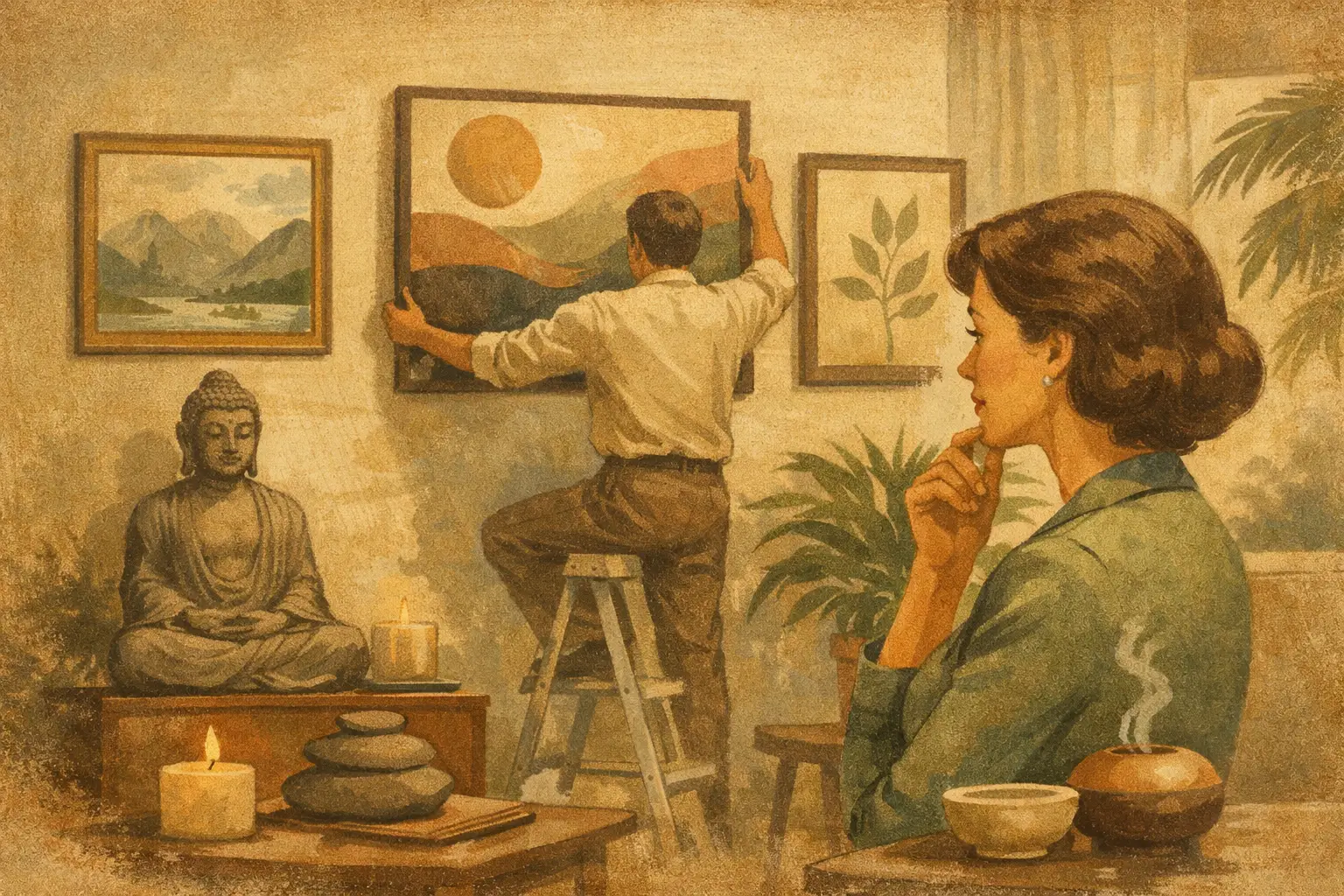
A wellness space can be beautifully designed and still feel unsettled. The lighting may be soft, the materials natural, the furniture restrained – yet something remains emotionally unformed. Often, that missing element is art. Buying art for wellness spaces is not simply a finishing step. It shapes how a room breathes, where the eye comes to rest, and what kind of inner pace the space invites.
That matters because wellness is not a visual style. It is an experience of regulation, ease, and presence. Art can support that experience quietly, without becoming sentimental or overly literal. The best pieces do not instruct calm. They create the conditions for it.
What buying art for wellness spaces really asks of you
Wellness interiors are often approached through scent, sound, texture, and light, but visual atmosphere is just as influential. The artwork in a meditation room, treatment suite, yoga studio, bedroom, or hospitality spa does more than decorate a wall. It sets emotional temperature.
This is why buying art for wellness spaces requires a different lens than buying for a dining room or a corporate lobby. In a wellness setting, intensity must be measured. A work can be powerful without being agitating, expressive without feeling chaotic, minimal without becoming cold. The right choice depends on the kind of restoration the room is meant to offer.
A private therapy office may need art that feels grounded and open-ended, offering clients space for their own associations. A spa lounge may benefit from broader visual softness and compositional flow. A home sanctuary can hold more personality, because intimacy allows for stronger aesthetic authorship. There is no single formula. There is only fit.
Start with the nervous system, not the wall color
Many buyers begin by matching art to upholstery, wood tone, or paint. Cohesion matters, but wellness-oriented art selection should begin elsewhere. Ask what state the room is meant to support.
Is the space for deep rest, reflective quiet, gentle optimism, or subtle renewal? Is it intended to slow the body down, or lightly lift the spirit? Once that is clear, color and composition become easier to judge.
Soft neutrals, muted earth tones, ink-like blacks, weathered whites, and mineral blues often work well because they do not crowd perception. But calm is not always pale. A deeper rust, moss green, charcoal field, or indigo wash can feel profoundly centering when handled with restraint. What matters is the emotional cadence of the piece – whether it opens space internally or demands too much attention.
Abstract art is often particularly effective in wellness settings because it leaves room for interpretation. It can hold feeling without fixing meaning too tightly. Works informed by Zen, Wabi-Sabi, natural rhythms, or contemplative minimalism tend to resonate because they honor silence, asymmetry, and impermanence rather than forcing visual perfection.
The difference between soothing and forgettable
One of the most common mistakes in wellness interiors is choosing art that is so polite it disappears. A room meant for calm should not feel generic. If the work has no point of view, the space can become emotionally thin.
The answer is not to choose louder art. It is to choose art with depth. A subtle composition, an imperfect gesture, a tonal field with visible texture, or a piece that suggests atmosphere rather than illustration can hold attention in a slower, more meaningful way. This is where museum-quality prints and carefully produced editions can be compelling – especially when the original feeling of the work is preserved through scale, surface, and framing.
There is also a difference between wellness art and cliché wellness imagery. Obvious symbols can flatten the room. Endless lotus flowers, stock-like beach scenes, and overused motivational visuals rarely create stillness. They explain too much. Stronger choices trust mood over message.
Scale changes the feeling of calm
A small work in a large wellness room can feel hesitant. An oversized work in a compact treatment room can feel oppressive. Scale is not a technical afterthought. It directly shapes how the body reads space.
In rooms designed for pause, larger pieces often work better than clusters of small art. One substantial artwork can anchor the room and reduce visual noise. It gives the eye a place to land. This is especially useful in meditation spaces, spa reception areas, and bedrooms where visual simplicity supports mental quiet.
That said, intimacy matters. In a reading corner, healing room, or private office, a smaller work can create a sense of closeness if it has enough presence. Framing also affects the experience. Thin natural wood, soft black, or restrained gallery framing tends to preserve serenity better than ornate or highly reflective finishes.
If the room already includes strong material texture – stone, limewash, linen, raw wood – the art does not need to compete. In fact, quieter framing and cleaner presentation often allow the work to integrate with more grace.
Medium, material, and why quality matters
Wellness spaces ask people to notice. That sensitivity extends to materials. A poorly printed image, harsh glare, or flimsy frame can disturb the atmosphere even if the composition itself is strong.
This is why production quality matters so much when buying art online. Museum-quality Giclée prints, well-balanced framing, and faithful color reproduction preserve subtlety. In contemplative interiors, subtlety is everything. If tonal shifts are lost or paper and finish feel cheap, the art may read as decorative filler rather than a meaningful visual presence.
Original artworks bring their own irreplaceable energy, especially where texture, gesture, and surface variation are central to the experience. But originals are not the only valid choice. Well-produced collector editions and framed digital works can be highly effective for wellness interiors, particularly when consistency, budget, or project scale matter. Hospitality and multi-room projects often require this balance.
The key question is not whether a piece is original or printed. It is whether it retains integrity. Does it feel intentional, tactile, and emotionally complete in the room? That is the standard worth keeping.
How to buy art for wellness spaces without overcurating them
A wellness space should feel composed, not staged. Art selection can go wrong when every choice is made to perform serenity too explicitly. Rooms need some air around them.
Leave space between artworks. Resist filling every wall. Let one piece carry a room if it can. Repetition can also help: not identical art everywhere, but a shared sensibility across spaces. Similar tonal families, philosophical coherence, or a recurring material restraint can create continuity without monotony.
For designers and project buyers, this is where curatorial selection becomes useful. It helps maintain emotional consistency across a home, boutique hotel, retreat property, or studio without making the environment feel branded in an obvious way. A thoughtful sequence of works can guide movement from entry to transition to rest.
If you are buying for a personal sanctuary, trust your own response. The piece should not only look appropriate. It should alter your pace when you stand before it. If it feels visually attractive but emotionally vacant, keep looking.
A few practical filters before you purchase
Before committing, view the work in relation to the room’s actual conditions. Morning light and evening light can change a piece dramatically. Cool daylight sharpens. lamplight softens. If the room is used mostly at dawn, after dark, or between treatments, those conditions matter more than a pristine product image.
Think about maintenance as well. In wellness businesses, durability is part of the decision. A high-humidity spa area may require different placement than a dry lounge or reception space. In homes, artwork above diffusers, near heat sources, or in direct sun may age differently over time.
Budget deserves honesty, too. It is often wiser to buy one exceptional piece than several forgettable ones. A single work with compositional intelligence and production quality can transform a room more fully than a scattered collection of lesser choices. For larger projects, a mix of originals and premium editions usually offers the best balance between distinction and scale.
At Taygeta Gallery, this is often where buyers find clarity: not in chasing trends, but in choosing work that carries stillness, character, and long-term visual life.
When art becomes part of the ritual
The most successful wellness spaces do not use art as ornament. They let it become part of the room’s rhythm. A painting seen during morning breathwork, a contemplative print near a soaking tub, a quiet abstract in a therapy room – these works become familiar in a deeper way. They participate in return.
That is why the best art for these interiors rarely shouts. It stays. It reveals itself slowly. It creates a place where the mind does not need to defend itself from excess.
When you are choosing art for a wellness space, choose the piece that makes the room feel more honest, more spacious, and more alive. Calm is not emptiness. It is a form of attention.
Leave a Reply