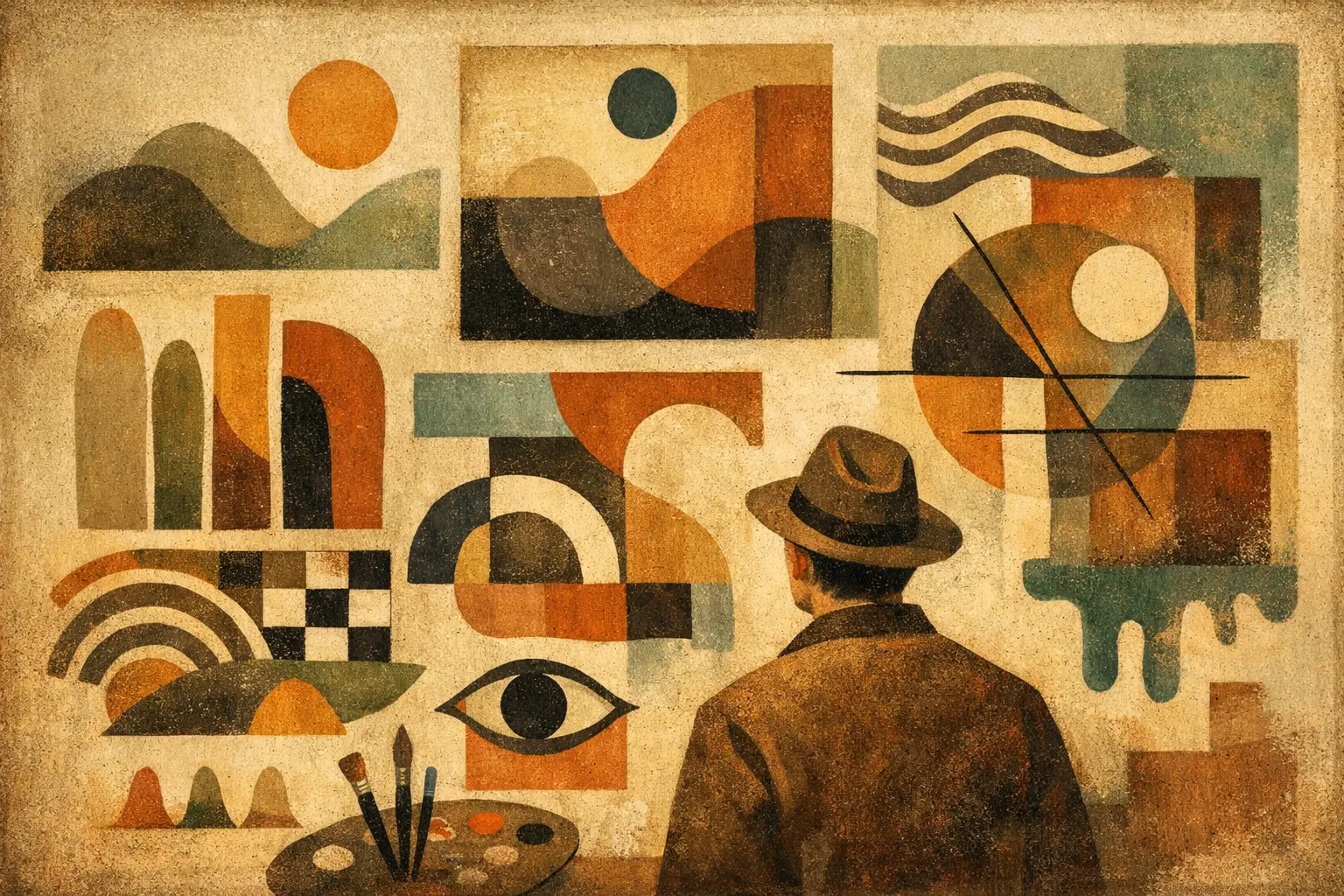
A quiet shift is happening on the walls of the most thoughtful interiors. Abstract art is moving away from formulaic gestures and oversized statements made for quick effect. In their place, emerging abstract art trends are favoring atmosphere, tactility, restraint, and a more intimate kind of presence – work that changes the room without overwhelming it.
For collectors, homeowners, and design professionals, this shift matters because abstract art now carries a more nuanced role. It is not only there to provide color or fill scale. The right piece can hold silence, introduce rhythm, soften architecture, or bring an interior back into balance. What feels current now is less about spectacle and more about sensibility.
Why emerging abstract art trends feel different now
The strongest contemporary abstraction reflects a broader cultural mood. People want spaces that restore attention rather than compete for it. They want objects with emotional depth, but they also want clarity. That combination has changed what resonates.
We are seeing less interest in generic “modern art” and more appreciation for works that feel curated, contemplative, and materially distinct. Buyers are asking better questions. Does the piece have presence up close as well as across the room? Does it feel timeless, or merely current? Will it live well with natural materials, changing light, and quieter interiors?
This is where abstraction has become especially compelling. It can remain open-ended while still carrying philosophy, memory, and spatial intelligence. The best new work is not trying to explain itself too quickly.
1. Quiet minimalism with emotional weight
Minimal abstract art is not new, but its current form is more sensitive than stark. Instead of cold reduction, artists are creating compositions with softened edges, muted tonal shifts, negative space, and a palpable sense of pause. These works often feel architectural, but they are rarely rigid.
What makes this trend notable is its emotional range. A restrained painting in bone, ash, ink, or clay can feel deeply expressive when surface, scale, and proportion are handled well. The appeal is obvious for contemporary interiors, especially spaces shaped by natural wood, stone, linen, and soft light.
There is a trade-off here. Quiet work asks more from the viewer and from the room. In a rushed or overly decorated space, its subtlety can disappear. But in a well-composed interior, it offers something louder art cannot – calm that still feels alive.
2. Texture as meaning, not ornament
One of the most important emerging abstract art trends is the return of texture with purpose. Thick surfaces, raw layering, mineral-like finishes, weathered brushwork, and tactile irregularities are being used not as decorative effects but as part of the work’s emotional language.
This reflects a growing preference for art that feels embodied and imperfect. Texture introduces time into a piece. It suggests revision, erosion, accumulation, and touch. In a market full of flat visual content, that physicality carries unusual power.
For designers, textured abstraction can also do practical work. It softens clean-lined spaces, complements natural materials, and adds depth without requiring high contrast. Yet scale matters. Heavy texture in a small room can feel dense, while delicate relief in a larger setting may need more visual breathing room to register.
Why tactile surfaces resonate in modern interiors
Contemporary interiors often lean smooth – plaster walls, polished stone, streamlined furniture, quiet palettes. Textured abstract art introduces a counterpoint. It creates friction in the best sense, giving the eye somewhere to rest and return.
Museum-quality Giclée production has also raised expectations around surface fidelity in prints, which means collectors can now seek tactile visual richness even when purchasing editions rather than one-of-one works. Still, not every textured original translates equally well. The success of the piece depends on how faithfully its material nuance is preserved.
3. Earth-led palettes and softened neutrals
Bold color has not disappeared, but it no longer dominates the conversation. Many of the most refined abstract works now move through sand, rust, smoke, charcoal, umber, faded indigo, moss, chalk, and warm off-white. These palettes feel grounded rather than muted for the sake of trend.
Their appeal lies in versatility and mood. Earth-led abstraction works across minimal, Japandi, organic modern, and transitional interiors because it does not fight the room. It participates in atmosphere. It can sharpen a quiet space or soften a more structured one.
This also aligns with a deeper desire for visual continuity between art and environment. Buyers are increasingly drawn to pieces that feel integrated rather than imposed. The risk, of course, is safety. A neutral abstract work still needs tension, movement, or formal clarity. Without that, it can slip into decoration.
4. Digital abstraction that still feels human
Digital art has matured. What once felt slick or overly synthetic is becoming more layered, painterly, and conceptually assured. Artists are using digital tools to create abstract compositions with translucency, fragmentation, grain, and spatial ambiguity that rival traditional media in emotional complexity.
This shift matters because digital abstraction is no longer confined to novelty. It has entered the language of serious collecting and sophisticated interiors, particularly when offered as carefully produced limited editions or framed collector formats. For many buyers, it offers access to distinctive work at a more approachable price point.
The line between digital and physical is also becoming less relevant. What matters now is visual intelligence, edition quality, and how the piece lives in space. Some digital works bring a luminosity that pigment cannot, while others intentionally mimic the softness of ink, paper, or washed mineral surfaces. It depends on the artist’s hand, even when that hand works through a screen.
5. East-influenced abstraction and the aesthetics of impermanence
A quieter but enduring movement within emerging abstract art trends draws from Eastern aesthetics – not as a surface reference, but as a philosophical foundation. Concepts such as emptiness, asymmetry, impermanence, and restraint are shaping how many contemporary abstract works are made and understood.
This can appear in spare compositions, broken lines, suspended forms, or surfaces that seem weathered by time. The effect is often meditative rather than dramatic. Instead of filling every moment, the work leaves room for stillness.
For design-conscious buyers, this approach offers more than visual harmony. It supports a way of living that values simplicity without sterility. In the right interior, these works create a rare sense of exhale. Taygeta Gallery has helped define this conversation by presenting abstraction through a lens of Zen and Wabi-Sabi sensibility, where beauty lives in nuance rather than perfection.
That said, philosophy should not become styling shorthand. The strongest works engage these traditions with sensitivity and depth, not trend-driven borrowing.
6. Larger scale, softer presence
Large abstract art remains desirable, but its function has changed. The most compelling oversized works today are not always high-energy focal points. Many are expansive yet quiet, using tonal composition, diffuse movement, or minimal structure to create presence without visual noise.
This matters in open-plan homes, hospitality settings, and commercial spaces where art must hold scale while preserving atmosphere. A large work can anchor a room, but if it competes too aggressively with furniture, materials, or sightlines, it can flatten the experience of the space.
The newer approach is more spatially aware. Instead of asking to dominate, the art collaborates with architecture. It gives a wall gravity while allowing the room to breathe.
Choosing scale with intention
Bigger is not automatically better. A compact but materially rich abstract piece can feel more resolved than an oversized canvas selected only to fill emptiness. Proportion, ceiling height, viewing distance, and the emotional tone of the room all matter.
Collectors often make stronger choices when they think less about coverage and more about cadence. What should the eye encounter first? Where should it rest? What kind of energy should remain after the initial impression fades?
7. Curated individuality over trend matching
Perhaps the most meaningful shift is that buyers are becoming less interested in matching art to a preset interior formula. They want work that feels discovered, not algorithmically assigned. This is changing the role of curation.
Rather than shopping by color alone, collectors are paying attention to authorship, materiality, edition structure, and conceptual voice. They are more open to abstraction that creates subtle tension in a room, not just harmony. This is a healthier way to buy art because it leaves room for personality.
It also means trend awareness should be used carefully. A current aesthetic can guide the eye, but it should not make the final decision. The best abstract art continues to reveal itself over time. It does not expire after one season of interiors imagery.
How to read these trends when buying abstract art
The most useful way to approach trend is not to ask what is popular, but what feels lasting within the current moment. A textured monochrome may be ideal for a serene bedroom but too recessive for a dynamic entry. A digital limited edition might suit a clean urban interior beautifully, while a heavily worked original may bring more soul to a layered, material-rich home.
Good collecting lives in that tension between personal response and spatial awareness. When both are present, abstract art becomes more than a finishing touch. It becomes part of how a room thinks and feels.
If the current direction of abstraction suggests anything, it is this: people are choosing art with greater care. They want work that holds complexity softly, that honors emptiness as much as form, and that remains generous to live with long after the novelty of newness has passed.
Leave a Reply