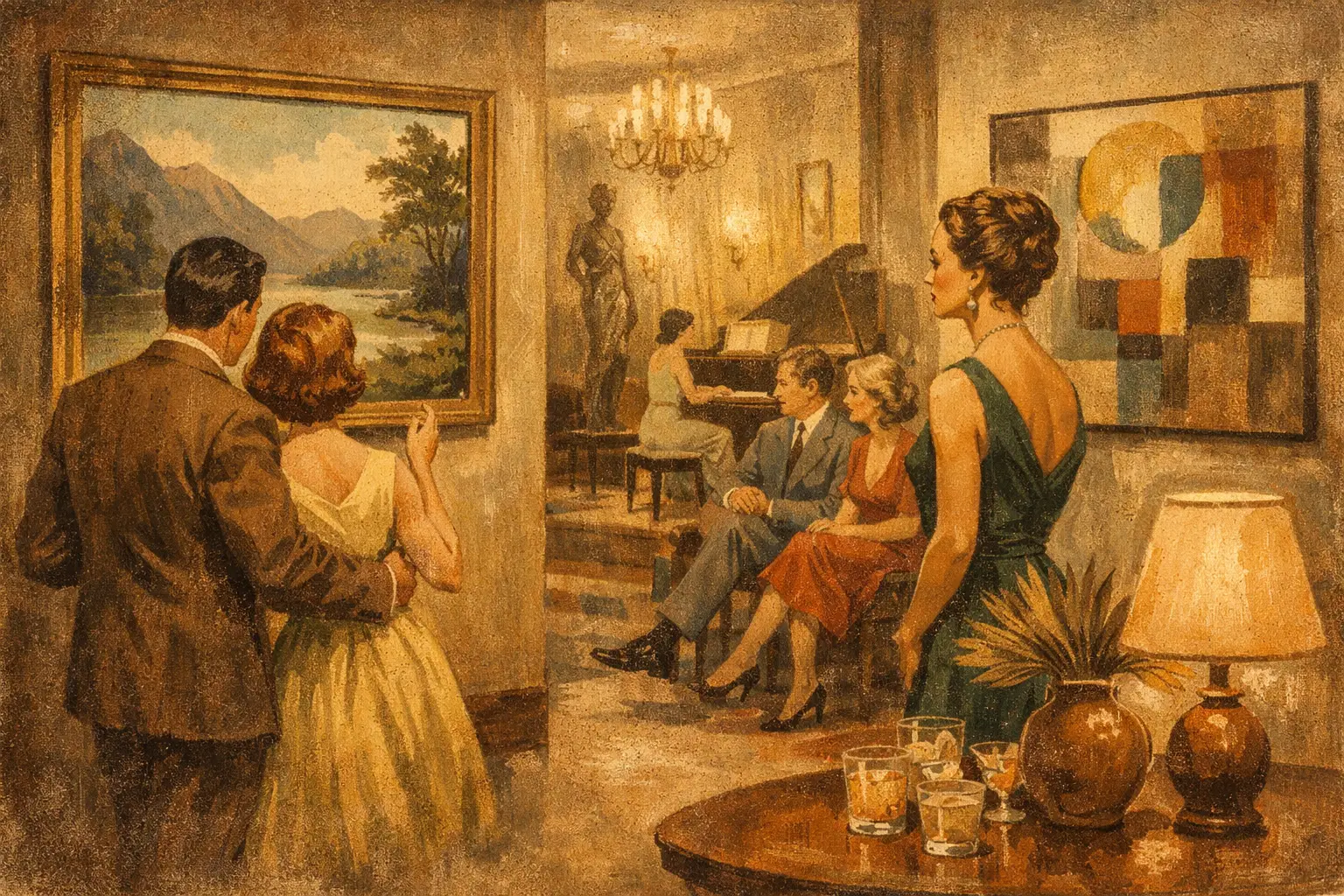
A guest may not remember the exact weave of a lobby rug or the name of a lounge chair. They often remember the feeling of arriving. Art for hospitality spaces gives that feeling a visual form: a moment of stillness at check-in, a spark of curiosity in a corridor, or an image that makes a restaurant feel rooted in its own point of view rather than assembled from a catalog.
For hotels, restaurants, wellness retreats, residences, and workplace hospitality settings, artwork is not a finishing touch. It is part of the atmosphere guests carry with them. The right work can hold a room together quietly, creating a sense of place without asking for attention at every glance.
Art for Hospitality Spaces Begins With Feeling
A successful hospitality art program begins before dimensions, frames, or color palettes. It begins with a question: what should someone feel here?
A coastal resort may call for spaciousness, softened horizons, and works that echo weathered stone, water, or open sky. A city hotel might need a sharper visual rhythm, with abstraction that reflects movement, architecture, and the pulse of the street beyond its doors. In a wellness setting, art can create a slower tempo through muted tones, negative space, organic forms, and images that invite the eye to rest.
This emotional direction should be specific enough to guide choices without becoming a rigid theme. There is a difference between evoking a place and illustrating it literally. A generic photograph of a beach may confirm a coastal location, but a layered abstract in mineral blue, sand, and pale gray can offer something more lasting. It gives guests room for their own associations.
That distinction matters because hospitality spaces serve many people. Artwork must feel considered to the design-aware traveler while remaining immediately welcoming to someone who simply wants to feel at ease. The strongest selections offer visual depth without becoming inaccessible.
Start With a Curatorial Brief, Not a Shopping List
When artwork is sourced room by room, a property can quickly lose its visual center. A curatorial brief prevents this. It defines the emotional language of the project, the desired level of contrast, the relationship between art and architecture, and the balance of original works, limited editions, and museum-quality prints.
The brief should also identify where guests pause and where they pass through. A dramatic arrival wall can support a large-scale statement piece. Guest corridors benefit from a sequence of related works that creates rhythm without repetition. In a restaurant, art near banquettes and intimate tables should reward close looking, while a larger work visible across the room can establish a memorable focal point.
Think in families rather than duplicates. A collection may share a tonal register, a material sensibility, or a philosophical thread while allowing each piece its own presence. Wabi-Sabi, for example, is not a decorative formula of beige and texture. Its deeper language is found in irregularity, restraint, time, and the beauty of the incomplete. That sensibility can be expressed through gestural abstraction, weathered surfaces, quiet monochrome, or photographic studies of natural change.
A coherent art program also leaves room for surprise. If every work matches perfectly, the setting may feel overly controlled. One unexpected color, a more intimate figurative piece, or a work with subtle tension can bring life to an otherwise tranquil composition.
Scale Changes the Entire Experience
One of the most common mistakes in hospitality art is choosing work that is too small for the architecture. A generous lobby wall with a modest print above a console can make both the art and the room feel uncertain. In expansive spaces, scale is not indulgence. It is proportion.
This does not always mean one enormous artwork. A thoughtful grouping can create equal presence, especially where a single large work would be difficult to install or transport. The key is to read the wall as part of the room’s composition. Consider the viewing distance, ceiling height, furniture below the artwork, and sightlines from entrances and seating areas.
Guest rooms require a different calibration. Art above a bed should feel substantial enough to anchor the room, yet not so visually forceful that it interrupts rest. Here, a restrained color field, contemplative landscape, or softly structured digital work can create intimacy. The same image that feels beautiful in a guest room may disappear in a ballroom, which is why a project needs varied formats rather than a one-size approach.
Framing has equal influence. A slim natural wood frame can lend warmth to minimalist interiors. Black or dark bronze can give a contemporary work definition against a pale wall. Float-mounted canvas and acrylic presentations can feel especially appropriate in clean-lined public spaces. The goal is not to make the frame invisible, but to make it belong.
Choose Materials Built for Real Use
Hospitality environments are beautiful, but they are demanding. Light levels, humidity, frequent cleaning, busy circulation, and long operating hours all affect how art should be produced and installed. An artwork selected only for its image may disappoint if its materials cannot support the setting.
Museum-quality Giclée prints are a compelling option for projects that need visual integrity, edition consistency, and flexible sizing. When produced with archival inks and carefully chosen papers or canvas, they can hold nuanced color and fine detail while making a cohesive multi-room program more attainable. Framed digital art can offer similar advantages, particularly for contemporary interiors that require a precise palette or a large-format visual statement.
Original artworks bring singularity and tactile presence, making them especially powerful in entry areas, private suites, executive lounges, and spaces designed around collecting. Their trade-off is practical: they may require a larger budget, more complex insurance planning, and closer attention to environmental conditions. A layered approach often works best, placing originals where their individuality has the greatest impact and using editions to extend the visual language throughout the property.
Glazing, mounting, and installation hardware should be chosen for the project rather than treated as afterthoughts. In high-traffic locations, durable framing and secure mounting are essential. Near strong daylight, UV-conscious production and placement help preserve the work’s character over time. A hospitality project is a living environment, and its art should be specified for longevity.
Let Art Create Pauses in the Guest Journey
The most memorable placements often occur outside the obvious feature wall. An artwork at the end of a long corridor can turn a practical route into a destination. A quiet piece outside an elevator bank can soften a transition. A small work near a reading chair can make a public lounge feel unexpectedly personal.
These moments matter because hospitality is made of transitions. Guests move from exterior to interior, from public space to private room, from activity to rest. Art can mark these shifts with grace. A vivid composition may energize an arrival zone, while a subdued work in a spa hallway gently signals that the pace has changed.
Consider visual noise as carefully as visual impact. Not every surface needs artwork. Rooms with patterned carpets, ornamental lighting, detailed millwork, and active views may need fewer, stronger pieces. By contrast, a minimal wall can carry a work with more texture, complexity, or color. The art should not compete with the interior. It should give the interior another layer of meaning.
Build a Collection With a Sense of Place
The best art programs resist the temptation to be universally generic. They reflect the property’s location, values, and audience without turning local culture into a superficial motif.
This can mean working with artists whose practices are connected to the region, selecting works that respond to the local landscape in an abstract way, or creating a collection around ideas that resonate with the destination. A desert property might explore light, erosion, and silence. An urban hotel might favor works about fragmentation, typography, or compressed perspective. A retreat centered on restoration may find its language in organic lines, imperfect geometry, and restrained tonal variation.
Cultural reference deserves care. Art should engage a place with respect and knowledge, not use its visual symbols as decoration. Curatorial context helps here. Even a short written note in a guest guide, on a discreet wall label, or within a digital welcome experience can deepen a visitor’s relationship to the work and the story behind it.
For designers and project teams, this is where a gallery partner can be especially useful: not simply as a source of images, but as a curator of relationships among works, rooms, materials, and guest experience. Taygeta Gallery approaches contemporary art through this balance of visual distinction, thoughtful production, and contemplative atmosphere.
Make the Investment Feel Intentional
Budget is real, and it should shape the art plan early. The question is not whether every work must be expensive. It is whether the collection feels deliberate at every price point.
Prioritize the locations that define the guest’s first impression and strongest memory. Invest in scale, framing, or original work where it will be experienced most fully. Then create continuity through editions, coordinated print formats, and smaller works in secondary areas. This approach protects the concept while allowing the budget to work harder.
It is also wise to plan for replacements, future phases, and additional locations. Editioned work can make expansion easier, while a clear curatorial framework ensures new additions do not feel disconnected from the original project. Ask for accurate lead times, production details, framing specifications, and support for volume purchasing before making final selections.
A hospitality interior becomes more generous when its art does more than fill a wall. Choose work that offers guests a reason to pause, look again, and feel that the space has been made with care.
Leave a Reply