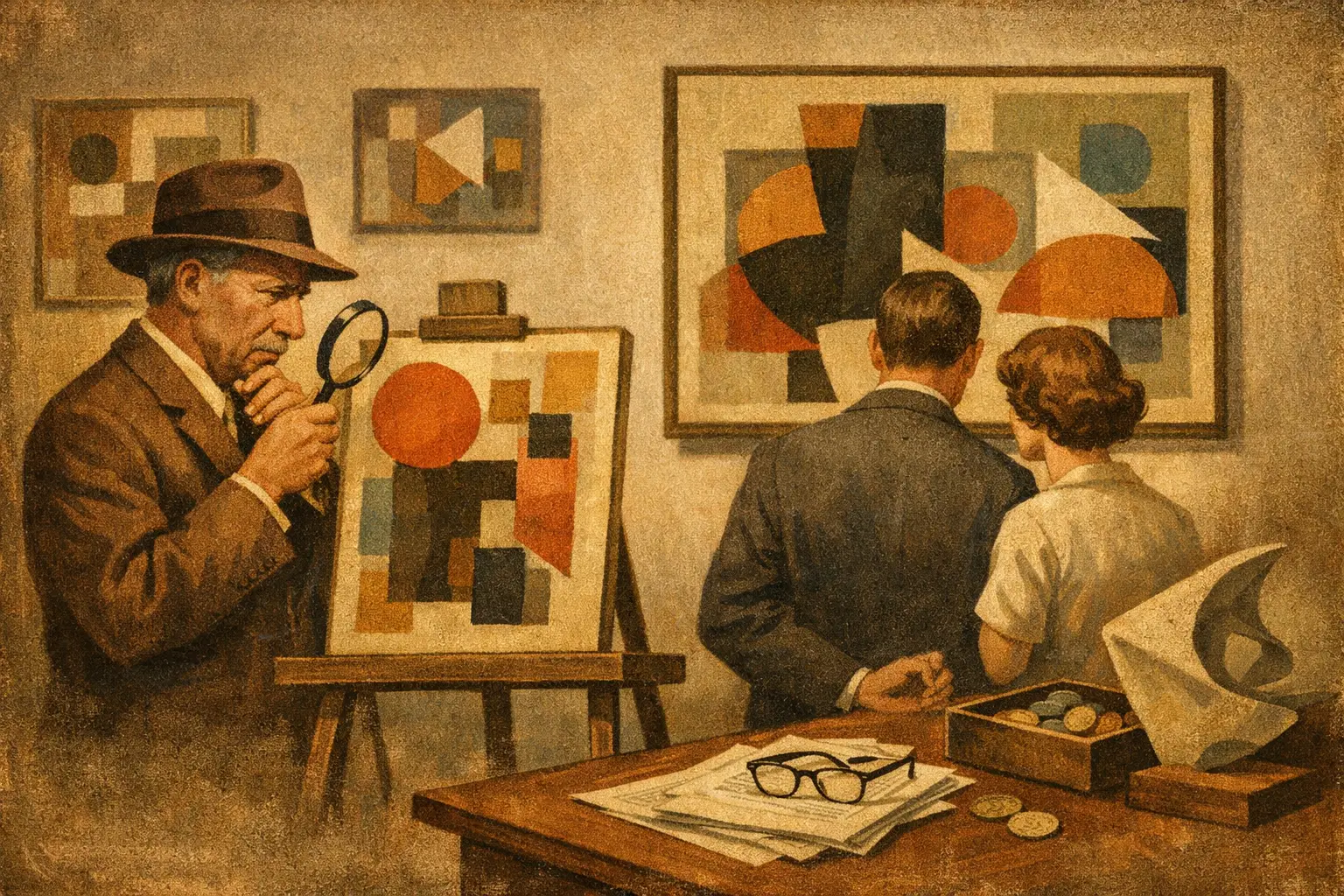
A quiet abstract painting can change the temperature of a room long before it changes hands at a higher price. It may bring proportion to an entryway, stillness to a bedroom, or a sense of presence to a hospitality space. But is abstract art a good investment in the financial sense? Sometimes. More truthfully, it can be a meaningful long-term acquisition when you understand what creates value and refuse to treat art like a quick trade.
Abstract art asks the viewer to participate. Without a literal scene to explain itself, it leaves room for memory, mood, material, and personal interpretation. That openness is part of its enduring appeal, but it also means that investment potential depends on far more than whether a work looks good above a sofa.
Is Abstract Art a Good Investment? The Honest Answer
Abstract art can hold or gain value, particularly when it is made by an artist with a clear practice, a growing exhibition history, and a well-documented body of work. Yet no artwork comes with a guaranteed return. The art market is shaped by taste, scholarship, institutional attention, economic conditions, and the often unpredictable momentum of an artist’s career.
For most buyers, the most sensible approach is to make a distinction between collecting and speculation. A speculative purchase is made chiefly because someone expects a rapid price increase. A collection is built through attention: to the artist’s ideas, the quality of the object, the context in which it was made, and the place it will occupy in one’s life. Financial upside may follow, but it should not be the only reason the work enters your home.
This is especially true in abstraction. A strong work does not depend on a passing subject or decorative trend. Its visual language may remain compelling across changing interiors because color, gesture, line, texture, emptiness, and balance are fundamental experiences. Still, visual longevity alone does not establish market value. The artist, the edition, and the evidence surrounding the work matter just as much.
What Gives an Abstract Artwork Lasting Value
Value in art is not one thing. It includes market value, certainly, but also cultural and personal value. The first can be measured in comparable sales and collector demand. The latter appears in the years you continue to live with a work without tiring of it.
The artist’s practice and trajectory
Look for consistency rather than noise. An artist does not need to be famous for their work to be worth collecting, but a coherent practice is meaningful. Are they developing a recognizable visual vocabulary? Have they shown their work in credible exhibitions, worked with respected curators or galleries, or received thoughtful critical attention? Is there evidence that they are committed to their practice over time?
An artist’s trajectory is more useful than a momentary social-media surge. Early-career artists can offer compelling opportunities, but they also involve greater uncertainty. Mid-career artists with an established record may feel more stable, though their prices can be higher. Neither category is automatically better. The key is to understand what you are buying and why.
Rarity, originality, and edition size
A one-of-a-kind original is naturally scarce. That scarcity can support value, particularly when the work is a strong example of the artist’s practice. Scale, medium, and the significance of a particular series can also matter. A small study may be intimate and beautiful, while a major canvas from a pivotal period may carry different market weight.
Limited-edition prints occupy their own legitimate place in collecting. A museum-quality Giclée print, properly produced and clearly identified, can offer an accessible way to acquire an artist’s image with exceptional visual presence. Its investment profile is different from an original, however. Edition size, artist involvement, paper quality, printing standards, signature, numbering, and whether the edition will ever be reprinted should all be clear before purchase.
A larger edition is not inherently without value, nor is a small edition automatically desirable. Transparency is what allows a buyer to assess rarity honestly. An edition of 25 has a different collecting logic than an open decorative print, and it should be presented accordingly.
Provenance and documentation
Provenance is the record of an artwork’s history: who created it, where it has been shown, who has owned it, and how it has moved through the world. For emerging artists, the documentation may begin simply with an invoice, certificate of authenticity, edition details, and artist information. Those papers are not ceremonial extras. They protect the work’s future legibility.
Keep purchase records, condition reports, correspondence related to the work, and any exhibition materials. If the artwork is framed, retain details about the framing and materials as well. A future buyer, insurer, or appraiser needs a clear chain of information, especially as years pass and memories become less precise.
Condition and care
The art market rewards works that have been cared for. Direct sunlight, moisture, smoke, unstable temperatures, and casual handling can all diminish condition. Works on paper are particularly sensitive to fading and humidity, while canvases can suffer from punctures, warping, or surface damage.
Thoughtful presentation is therefore not merely aesthetic. Use archival materials when framing, avoid hanging art in harsh light or damp rooms, and insure pieces of meaningful value. A calm, well-kept interior is often the best environment for art and for the people who live with it.
The Difference Between Decorative Appeal and Collectibility
There is nothing lesser about buying art because it makes a space feel complete. Art belongs in lived environments, not only in storage or auction rooms. Yet decorative appeal and collectibility should not be confused.
A work may perfectly suit a room while having limited resale potential. Another may be historically significant but visually difficult for your home. The most satisfying acquisitions often sit between these poles: they are aesthetically persuasive now and rooted in an artist’s serious, continuing practice.
When choosing abstract art for an interior, consider whether the piece has enough depth to keep revealing itself. Does the composition hold tension as well as harmony? Does the surface reward close looking? Does the work still feel alive when the furniture, paint, or season changes? These are subjective questions, but they are not superficial ones. A collector’s sustained attention is often a better early signal than a trend report.
How to Buy Abstract Art With Both Heart and Judgment
Begin with a budget that leaves room for framing, shipping, insurance, and proper care. Then look beyond the image on a screen. Request or review dimensions, materials, edition information, condition details, and photographs that show texture or scale where available. A work that appears restrained online may have extraordinary tactility in person.
Ask direct questions before buying: Is this an original or an edition? Is it signed and dated? What is the edition size? Has the work been exhibited? What documentation accompanies it? How should it be installed and cared for? A reputable gallery should make these basics clear without making the process feel intimidating.
It can also help to collect slowly. Rather than trying to create an instant “art collection,” acquire fewer works that carry real conviction. Notice the threads that emerge: a preference for mineral tones, spatial quiet, lyrical gesture, imperfect geometry, or the disciplined emptiness associated with Wabi-Sabi. Over time, these choices become a collection with an inner coherence, not simply a series of purchases.
For designers and project specifiers, practical considerations deserve equal attention. Verify lead times, framing specifications, edition availability, and the requirements of the site. In a hotel, workplace, or residential development, artwork must endure both visual scrutiny and the realities of installation. A well-curated edition program can offer consistency across multiple spaces, while original works can give key public areas a singular point of focus.
When Investment Should Not Be the Deciding Factor
Do not buy art you do not genuinely want to live with merely because someone predicts it will rise in value. Selling art can involve commissions, taxes, shipping, insurance, restoration, and long waiting periods. Unlike publicly traded assets, art is not immediately liquid, and there may be no buyer at the moment you wish to sell.
It is also wise to be cautious of language that promises certainty. Emerging artists deserve support, and early collecting can be deeply rewarding, but no gallery, advisor, or market observer can responsibly guarantee future returns. The strongest purchase is one that remains worthwhile even if its resale price never changes.
For many collectors, this is where abstract art becomes especially compelling. Its value is not exhausted by an appraisal. It can organize a room without dominating it, offer respite from visual noise, and become more familiar and more mysterious through repetition. A work that continues to meet you differently over the years has already delivered a return that is difficult to quantify.
Choose the abstract work that gives your space a deeper rhythm, then preserve its story with the same care you gave to choosing it. If its market value grows, that is a welcome possibility. If it instead becomes the image you cannot imagine leaving behind, the investment has taken on a more enduring form.
Leave a Reply