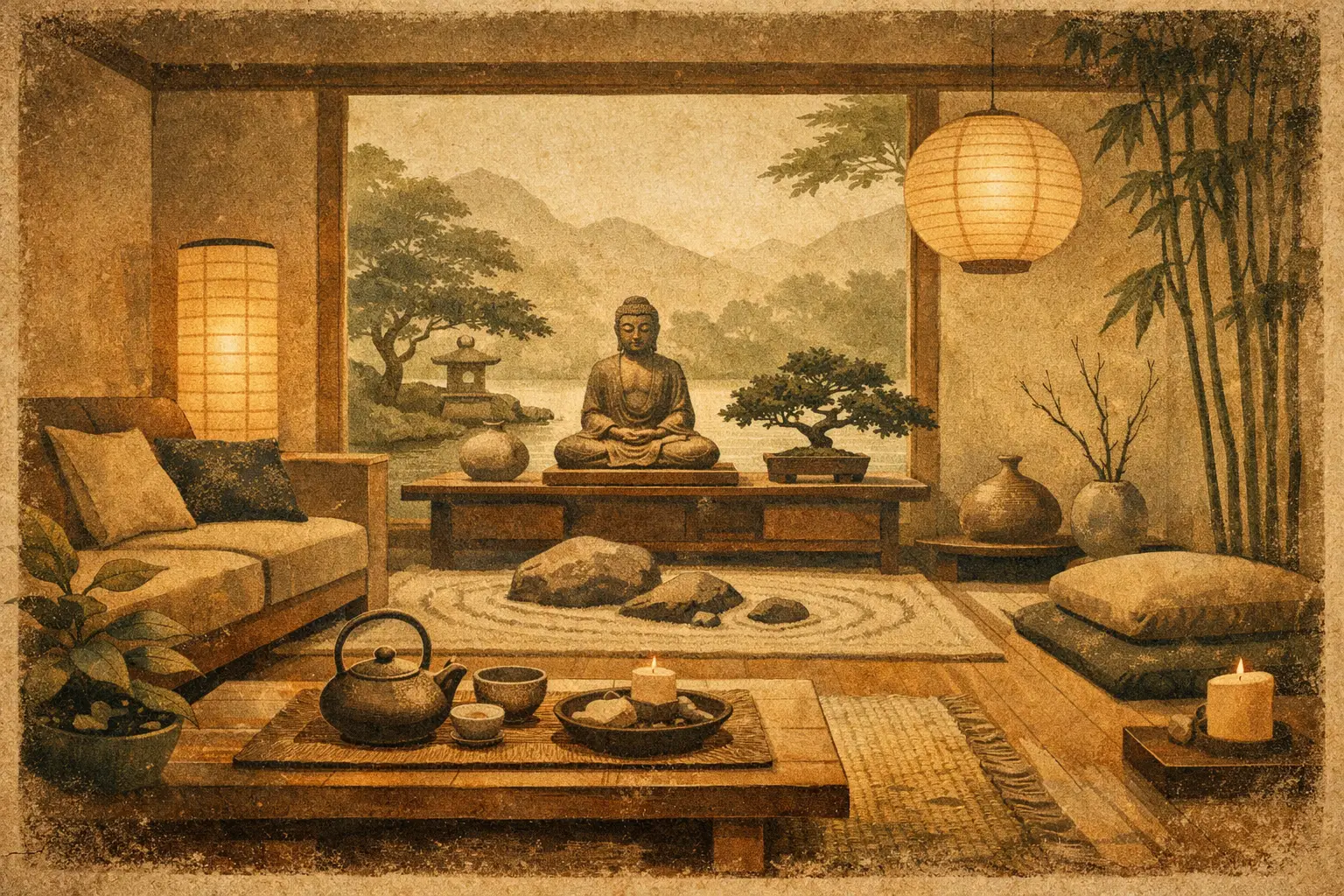
A Zen living room rarely feels empty. It feels edited. The difference matters.
When people ask how to style a zen living room, they often picture white walls, a low sofa, and almost nothing else. But Zen interiors are not about deprivation or trend-driven minimalism. They are about quiet order, natural materials, and a kind of visual honesty that allows the room to breathe. The goal is not to make a space look sparse. It is to make it feel settled.
That feeling begins long before decor. A Zen room works when each element has enough space to be seen, enough purpose to belong, and enough restraint to support the whole. For a living room, where daily life tends to gather and sprawl, that balance is especially meaningful.
How to style a zen living room from the ground up
Start with the atmosphere, not the accessories. Before choosing a throw pillow or a ceramic vessel, look at the room as a field of energy. Is it visually noisy? Does furniture interrupt movement? Are there too many competing materials or colors? A Zen interior asks for coherence first.
The palette should feel soft, mineral, and grounded. Warm whites, stone, sand, oat, clay, weathered brown, charcoal, and muted green all work well, especially when they are layered rather than sharply contrasted. Stark black-and-white schemes can look graphic and disciplined, but they often read colder than intended. If your home gets limited natural light, lean toward warmer neutrals so the room does not become austere.
Texture does much of the emotional work. Linen, wool, raw wood, paper, plaster, rattan, and matte ceramics create depth without visual chatter. A Zen living room is rarely about glossy perfection. Small irregularities – wood grain, handwoven fibers, a lightly uneven ceramic surface – bring the room closer to Wabi-Sabi, where beauty lives in authenticity rather than polish.
Let the architecture lead
If your home has large windows, exposed beams, alcoves, or a strong view, use them. Zen styling is most convincing when it responds to what is already there instead of imposing a look on top of it. A city apartment can still feel serene, but the strategy may be different from a sunlit coastal home. In a compact room, fewer but more substantial pieces usually feel calmer than many small ones.
Negative space is part of the design. That does not mean leaving corners bare for effect. It means resisting the urge to fill every surface. A quiet wall, a clear path between seating, or a low table with only one meaningful object can create more presence than a crowded arrangement ever could.
Furniture should feel low, simple, and grounded
The most convincing Zen living rooms are anchored by furniture with visual humility. Think lower profiles, clean silhouettes, and materials that feel tactile rather than flashy. Sofas should invite exhale, not performance. Upholstery in linen, cotton, bouclé, or washed textures tends to work better than shiny leather or high-contrast prints.
Wood tones are especially important. Lighter oak and ash create airiness, while walnut and smoked wood add depth and gravity. Either can work, but mixing too many unrelated finishes often breaks the calm. Choose one dominant wood tone and let secondary materials support it quietly.
A coffee table should not dominate the room. Rounded edges, simple joinery, stone tops, or worn wood surfaces are all strong choices. If you prefer a more sculptural table, keep the rest of the furniture restrained. Zen style depends on balance, and one dramatic object can be enough.
Seating arrangements should encourage conversation and stillness equally. Instead of pushing everything against the walls, create a gentle center. Even in small spaces, pulling furniture slightly inward can make the room feel more intimate and composed.
Edit comfort, not softness
There is a common mistake in serene interiors: replacing depth with blandness. A Zen living room should be comfortable, but not overstuffed. Too many pillows, oversized sectionals, or layers of plush accessories can make the room feel sleepy rather than clear-minded. Comfort here is quieter. It comes from proportion, touch, and ease of use.
Art is what gives the room its inner life
A Zen living room without art can feel unfinished, as if calm has been mistaken for emptiness. The right artwork introduces soul, rhythm, and reflection. It gives the room an emotional center.
This is where restraint matters most. Instead of covering every wall, choose one or two works that hold space with confidence. Abstract compositions, contemplative landscapes, monochrome studies, ink-inspired gestures, or contemporary works shaped by Zen and Wabi-Sabi sensibilities can bring stillness without becoming literal. Art does not need to depict tranquility to create it. Often, the most effective pieces contain tension and release, density and openness, much like the room itself.
Scale is crucial. A piece that is too small will feel timid. A piece that is too aggressive will disturb the atmosphere. In many living rooms, one medium-to-large artwork above a sofa or on a primary wall is enough. If you prefer a grouping, keep the framing consistent and the spacing generous.
Framing should support the work, not compete with it. Natural wood, matte black, off-white, or gallery-style float frames usually sit well within a Zen palette. Museum-quality prints are especially compelling in this setting because precision of color, paper, and finish matters when the room itself is pared back. In a quiet interior, every detail becomes more visible.
For collectors and design-minded buyers, this is often the point where the living room shifts from styled to curated. A thoughtfully chosen work does more than match the sofa. It shapes the emotional temperature of the room.
Light, objects, and rhythm complete the space
Zen interiors depend on light as much as furniture. Natural light should be softened, not blocked. Sheer linen curtains, woven shades, or simple panels can filter brightness while preserving a sense of openness. Heavy drapery often feels too formal unless the architecture calls for it.
Artificial lighting should be warm and layered. A paper lamp, a ceramic table lamp, a discreet floor lamp, and gentle ambient lighting can create evening calm without harsh glare. Avoid overly cool bulbs. They flatten materials and interrupt the warmth of the room.
Decorative objects should be selected with discipline. One branch in a vessel, a handmade bowl, a stack of art books, or a stone sculpture can say more than a crowded shelf. The question is not whether an object is beautiful on its own. It is whether it contributes to the room’s overall stillness.
Plants are useful, but not mandatory. If you use them, choose forms with sculptural clarity – an olive tree, a single orchid, trailing greenery with space around it. Too many small plants can become visual clutter quickly.
What to remove when the room feels off
Sometimes the fastest way to style a Zen living room is to subtract. Remove anything that is purely filler: extra side tables, decorative signs, shiny hardware, busy rugs, excess baskets, scattered cords, or mass-produced accessories that add volume without meaning. Serenity is often blocked by accumulation, not lack.
That said, Zen does not mean impersonal. Books you return to, objects gathered through travel, and art that reflects your own sensibility belong here. The room should feel clear, not anonymous.
How to keep a zen living room from feeling staged
The trade-off with any refined interior is the risk of making it look too controlled. A Zen room should not feel like a showroom that no one inhabits. The remedy is to let use shape the space gently. A folded throw, a cup on a tray, light falling across textured fabric, one well-chosen artwork with presence – these details make calm believable.
Perfection is not the goal. Patina, asymmetry, and slight irregularity give the room depth. This is why Wabi-Sabi principles pair so naturally with Zen styling. They allow the living room to remain elegant while staying human.
If you are building the room slowly, begin with the essentials: layout, palette, materials, and one artwork that anchors the atmosphere. Everything else can follow with time. At Taygeta Gallery, this curatorial approach is often what separates a merely minimal room from one with genuine resonance.
A Zen living room should not ask for attention every time you enter it. It should offer relief – a place where form, light, and feeling settle into one quiet conversation.
Leave a Reply