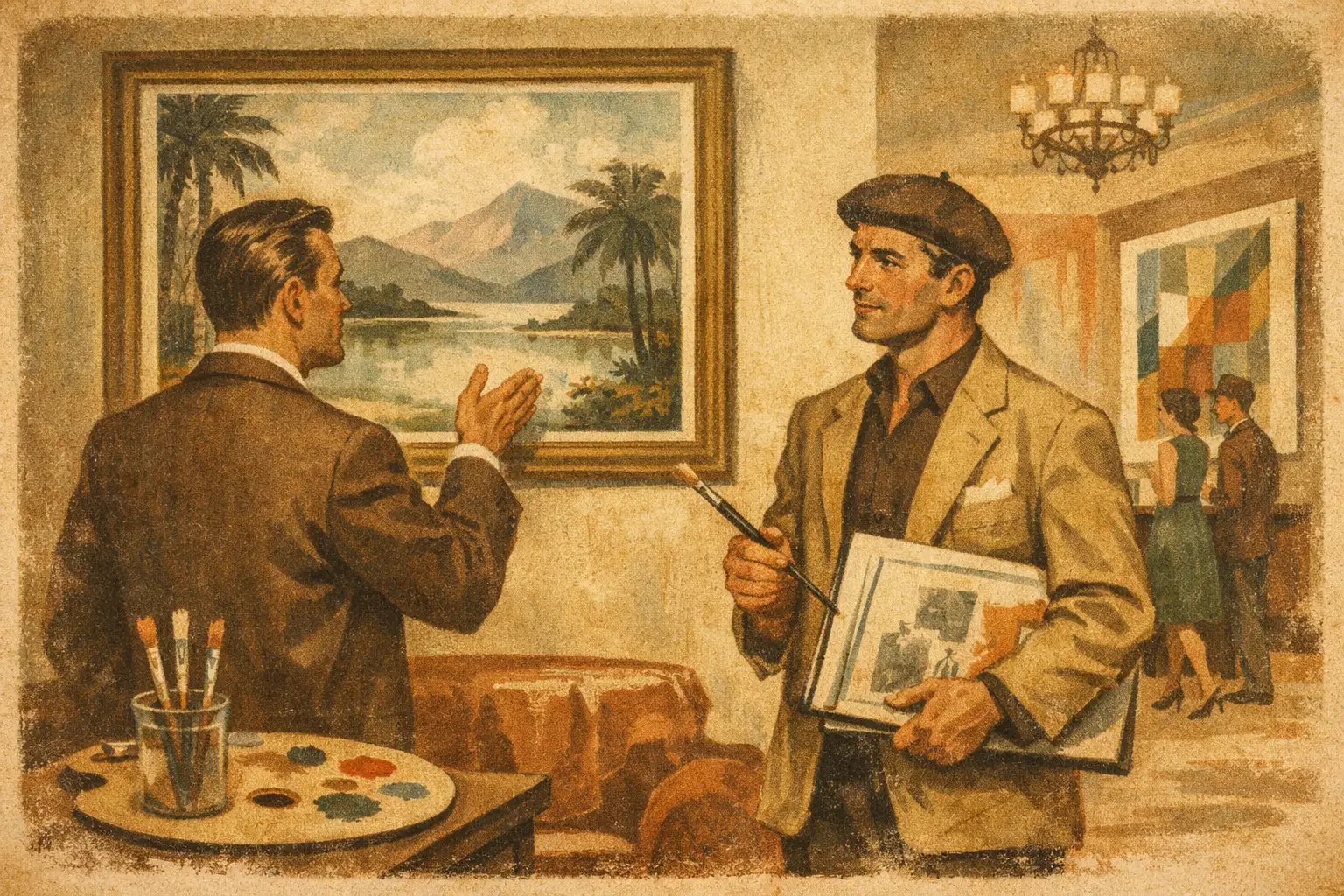
A hotel lobby can be technically perfect and still feel forgettable. The lighting is right, the materials are expensive, the furniture is well specified – yet the atmosphere never settles into memory. Art is often the difference. When approached with care, it gives a property its emotional register, its rhythm, and its point of view. That is why learning how to commission artwork for hotels is not simply a procurement exercise. It is a design decision that shapes how guests feel when they arrive, pause, rest, and return.
Hotels ask more from art than private homes do. The work must hold up visually across hundreds or thousands of encounters, speak to a wide range of guests without becoming generic, and live comfortably within a demanding operational environment. It needs presence, but not noise. Distinction, but not gimmick.
How to commission artwork for hotels with a clear concept
The strongest hotel art programs begin before any artist is contacted. They begin with a curatorial idea. Not a vague mood board, but a coherent narrative that belongs to the property.
A boutique hotel in a desert landscape may call for restraint, mineral tones, and spacious compositions that echo the horizon. A city hotel with a sharper social energy may need work with tension, wit, or urban texture. A wellness retreat may benefit from quiet abstraction, organic forms, or imagery rooted in stillness and impermanence. In each case, the artwork should not merely match the furniture. It should deepen the identity of the place.
This is where many commissions go off course. Teams start with wall measurements and budget lines, which matter, but those practical details should follow the larger intention. Ask first what the hotel wants guests to remember. Is the property trying to feel contemplative, worldly, rooted in local culture, or quietly luxurious? Good commissions answer those questions in visual form.
A useful concept brief usually includes the architectural language of the hotel, the emotional tone each area should carry, the guest profile, and any cultural references that should inform the work. It should also clarify what the art must avoid. Sometimes the clearest direction comes from naming what would feel too literal, too decorative, or too cold.
Budgeting for commissioned hotel art
A hotel art budget is rarely just about the artwork itself. It includes design development, artist fees, revisions, production, framing or fabrication, shipping, installation, and sometimes fire-safety or durability requirements. If the work will be reproduced across guest rooms, licensing terms may also matter.
This is why price comparisons can be misleading. One proposal may look less expensive until printing standards, materials, freight, and install logistics are added. Another may appear higher at first, but includes museum-quality production, better visual longevity, and fewer on-site complications.
There is also a strategic decision to make about where original works matter most. In many hotel projects, it makes sense to place one-of-a-kind pieces in signature spaces such as the lobby, reception, restaurant, or presidential suite, then use limited editions or high-quality Giclée prints in guest rooms and corridors. That balance preserves originality where impact is highest while keeping the broader program financially disciplined.
The right budget is not always the largest one. It is the one aligned with the property’s positioning. A luxury hotel filled with generic art can feel thinner than a modest hotel with a more thoughtful collection.
Choosing the right artist or art partner
When considering how to commission artwork for hotels, artist selection is where taste and operations meet. A beautiful portfolio is not enough. Hospitality projects require responsiveness, consistency, and an ability to work within schedules, technical constraints, and layered stakeholder feedback.
Look for an artist or curatorial partner whose visual language already shares something with the project. Commissioning is not about forcing an artist into an unfamiliar style. The most convincing results happen when the hotel’s identity and the artist’s existing practice naturally overlap.
It also helps to assess range. Can the artist create a series that feels connected without becoming repetitive? Can they scale work for large public areas as well as more intimate rooms? Can they adapt materials when needed without losing the integrity of the concept?
For larger programs, many hotels benefit from working with a gallery or curatorial partner rather than managing individual artists one by one. This can simplify approvals, production oversight, and edition planning. For design-led hospitality groups, that structure often creates more cohesion across the property.
A brand like Taygeta Gallery, with its curatorial emphasis on stillness, abstraction, and museum-quality production, can be especially relevant when a hotel wants art that feels elevated and emotionally precise rather than trend-driven.
What to include in the commission brief
A strong brief protects both the hotel and the artist. It creates enough clarity to avoid confusion, while leaving enough openness for real artistic thinking.
At minimum, the brief should define the spaces involved, wall dimensions, desired quantities, budget parameters, timeline, material preferences, and installation conditions. It should also include visual references for the interior palette and architecture, but these references should guide rather than dictate.
More importantly, the brief should describe the emotional and conceptual aim of the project. An artist can respond far more intelligently to a phrase like quiet luminosity, urban introspection, or weathered elegance than to a command to make something beige and calming.
If the hotel wants local resonance, be specific about what that means. There is a difference between honoring place and relying on clichés. A coastal hotel does not necessarily need obvious seascapes. It may be better served by tonal works that suggest tide, salt air, and shifting light in a more sophisticated way.
Timelines, revisions, and production realities
Hotel openings move fast until they do not. Construction delays, procurement changes, and last-minute design revisions are common. Art commissioning needs to account for that instability.
Build more time into the schedule than seems necessary. Artists need room for concept development, approvals, material sourcing, fabrication, and finishing. If frames, specialty substrates, or international shipping are involved, timelines can extend quickly.
Revision rounds should be defined early. Too many voices and too many late changes can flatten a strong concept into something safe and forgettable. Usually, the best process is to approve direction at the sketch or proposal stage, then reserve final revisions for scale, palette refinement, or material adjustments rather than fundamental reinvention.
Production quality deserves close attention. In hospitality settings, poor printing, weak framing, or inconsistent color reproduction becomes visible fast. Guest rooms may contain softer moments, but public spaces expose every compromise. Museum-quality printmaking, proper mounting, and durable finishes are not indulgences. They are part of the guest experience.
Commissioning art for different hotel spaces
Not every area should speak in the same volume. A lobby can carry a stronger statement because it establishes first impression and identity. Corridors need rhythm and continuity, not visual clutter. Guest rooms benefit from work that rewards quiet looking rather than demanding attention. Restaurants and bars can often sustain more tension, sensuality, or boldness.
This is where a layered art strategy becomes useful. Think of the property as a sequence of emotional states rather than a collection of walls to fill. Arrival, transition, retreat, gathering – each one can hold a different visual energy while remaining part of the same story.
Scale matters as much as style. Art that feels generous in a rendering can feel undersized once installed beneath high ceilings or against long corridor runs. Mockups, digital placement studies, and sample production pieces are often worth the effort, especially for larger programs.
The trade-offs hotels should expect
Commissioning art offers originality, but it asks for patience. Buying ready-made work is faster, but often less specific. Site-responsive pieces can create a rare sense of belonging, though they may cost more and require longer lead times. Reproducible editions offer consistency across multiple rooms, but they need strong curatorial control to avoid feeling formulaic.
There is no single correct model. A design hotel with a strong cultural identity may prioritize bespoke work and artist collaboration. A larger hospitality brand may need a system that balances customization with repeatable production. The right answer depends on the property, the guest promise, and the lifespan expected from the collection.
What matters most is resisting art as afterthought. When commissioned well, it does not simply decorate the hotel. It slows the eye, steadies the room, and gives guests a sense that someone cared about what this place should feel like.
The best hotel art rarely announces itself too loudly. It stays with people for quieter reasons – a color remembered after checkout, a sense of calm in a corridor, a lobby that felt composed rather than staged. That is the real measure of a successful commission.
Leave a Reply