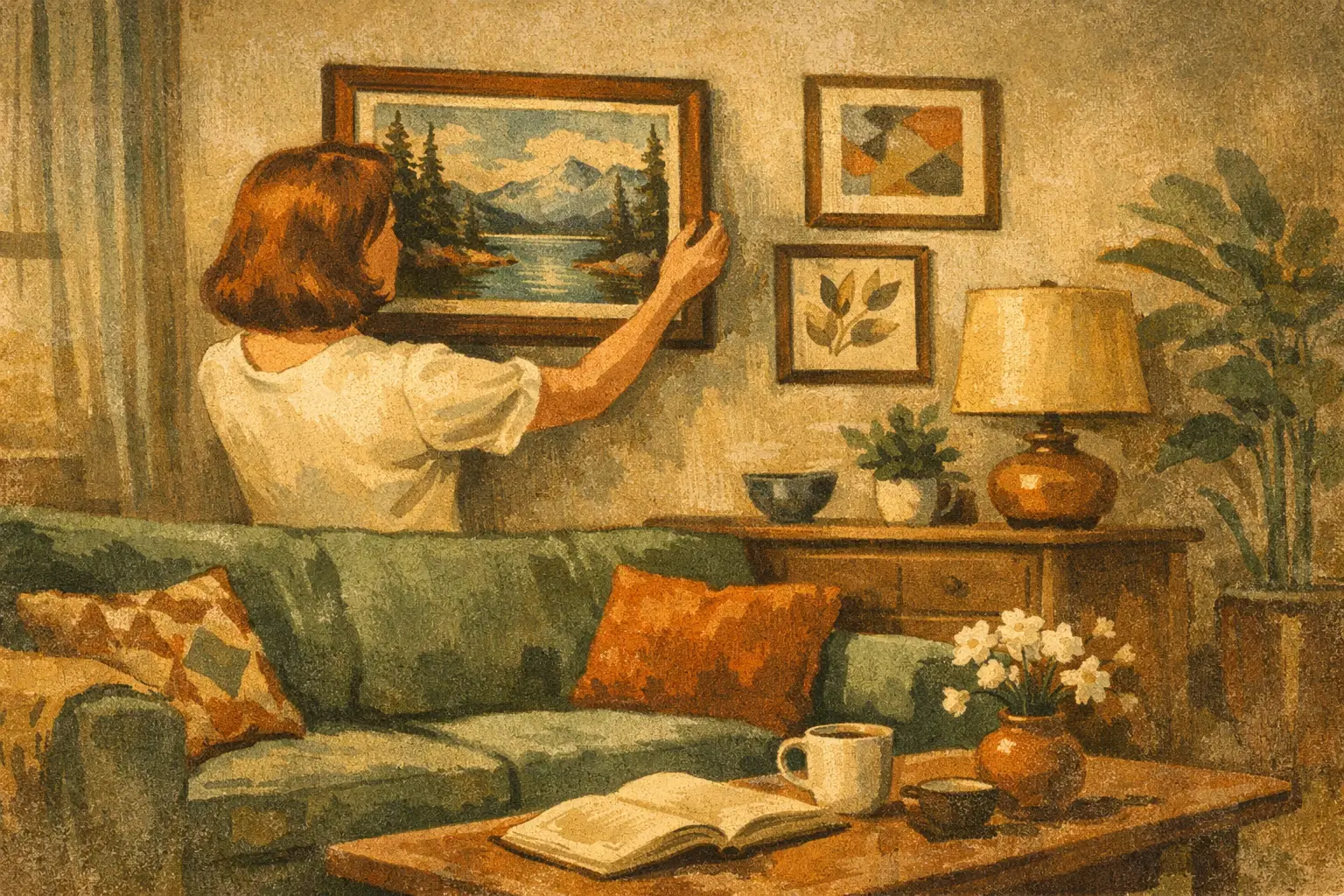
A rental can hold more of you than a lease agreement suggests. The right artwork changes not only what a room looks like, but how it receives you at the end of the day. This guide to art for rental spaces begins with a simple premise: temporary walls do not require temporary taste.
For renters, the challenge is rarely a lack of vision. It is the tension between wanting a home with presence and needing to leave it intact. Art offers a graceful answer. It can establish mood, soften the impersonality of standard finishes, and give a familiar room an inner life – often without a major renovation or a single irreversible decision.
Begin with the atmosphere, not the empty wall
Before measuring a wall, consider what you want the room to feel like. A pale abstract with layered, weathered marks may bring quiet to a bedroom. A vivid surrealist work can give a compact living room a sense of wit and movement. In a dining area, a considered photographic or figurative work invites conversation without asking for attention at every moment.
This is where art differs from decoration. A decorative object fills a visual gap. A work of art can set a psychological temperature. It may offer stillness, friction, memory, or a welcome touch of the unfamiliar.
Look at the elements you cannot change: the floor tone, kitchen cabinets, window light, and the scale of the room. Do not feel compelled to match them exactly. Harmony is not sameness. A cool, minimal apartment may need the warmth of earthy color. A room filled with beige and clean lines may come alive through one dark, textured work. Wabi-Sabi interiors, in particular, benefit from art that carries evidence of touch, irregularity, or impermanence rather than polished perfection.
A guide to art for rental spaces: choose scale with intention
The most common mistake in rental interiors is choosing art that is too small. A single postcard-sized print above a sofa can make even a beautiful image feel apologetic. When a wall has visual weight, the art should be able to meet it.
Above a sofa, bed, or console, aim for a work – or a grouping – that spans roughly two-thirds of the furniture width. This is a guide rather than a rule. A low-profile sofa in a small room may call for something more restrained, while a long blank wall can support a generous horizontal composition.
Large art is often more effective than a crowded collection of small pieces. One substantial framed print can create a focal point with less visual noise, fewer holes, and a more deliberate result. It also travels well: a work that anchors a rental living room may later find a place in a hallway, study, or future home.
A gallery wall has its own appeal when it is built with a clear rhythm. Let the works share something – a palette, frame finish, subject, or emotional register. Mix sizes only when the arrangement has enough space to breathe. If the collection begins to feel like a collage of purchases made at different moments, edit it. The quiet confidence of fewer works is often more lasting.
Frame for the room you have, and the one you may have next
Frames make art feel finished, but they also shape its relationship to the interior. Natural oak, walnut, black, and white remain versatile choices because they do not over-explain the work. A warm wood frame can soften digital art or graphic abstraction. A slim black frame gives a vivid print architectural clarity. White can create an almost suspended feeling against a darker wall.
For renters, museum-quality giclée prints are an especially considered option. They provide tonal depth and refined detail while remaining easier to budget for, transport, and reframe than many large original works. A limited edition can also offer the pleasure of collecting something with rarity and authorship, even when a first apartment or city lease is not the final destination.
Avoid buying a frame only for the color of your current walls. The better question is whether it will live easily across different rooms and changing tastes. A thoughtful frame is part of the work’s long life.
Hang art without making the lease a source of anxiety
Read the lease first. Some buildings allow small nail holes; others are strict about any wall damage. The material of the wall also matters. Drywall, plaster, brick, and concrete call for different approaches, and a heavy framed piece should never rely on a method that cannot support it safely.
For lightweight, unframed prints and small works, removable picture-hanging strips can be useful. Follow the stated weight limit, clean the wall first, and allow adhesive to set before hanging. They are less dependable on textured walls, humid bathrooms, or freshly painted surfaces. They can also remove paint when detached too quickly, so test a discreet area if you are unsure.
For a framed work of meaningful weight, a small nail or picture hook may be the wiser choice if permitted. One professionally patched hole at move-out is often less risky than a fallen frame, damaged art, or a pulled strip. Keep the original paint information, take move-in photographs, and set aside time for modest repairs before handing back the keys.
There are elegant no-hole options as well. Lean a larger framed work on a console, mantel, or low bookshelf, securing it where needed so it cannot slip. Place a smaller piece on a picture ledge. Rest a work behind a lamp, a stack of books, or a vessel with sculptural form. This layered approach feels informal yet composed, particularly in rooms that favor natural materials and softened edges.
Let art solve the particular problems of rental rooms
Rental spaces often arrive with awkward proportions: narrow corridors, low ceilings, blank expanses above a bed, or a living room where every wall competes with a door. Art can redirect attention.
In a narrow hallway, use one vertical work to create a destination rather than a passage. A mirror may add light, but art adds identity. For a low ceiling, choose vertical compositions and hang them with enough room above the furniture to create a sense of lift. In a small bedroom, a calm work above the bed can replace the need for an elaborate headboard.
If your rental lacks architectural character, resist the urge to compensate with constant visual activity. One strong work near the entry can establish the whole home. It tells visitors, and reminds you, that the space has been considered.
Light deserves equal attention. Do not hang works where direct sun will bleach paper or fade pigments over time. If daylight is unavoidable, select a position that receives indirect light and consider UV-protective glazing. At night, a nearby lamp or adjustable picture light can reveal texture and color more gently than a bright overhead fixture.
Collect for emotional continuity, not a perfect reveal
A home assembled in one weekend can look finished but rarely feels lived with. Let your art collection develop through attention. Choose a piece because its palette lingers in your mind, because its forms recall a landscape, or because its ambiguity gives you something new to see after months of living with it.
This does not mean every work must be solemn. Humor, color, and visual surprise belong in a considered interior. The point is to avoid treating art as a last-minute styling requirement. A meaningful print in a modest frame is more persuasive than generic wall decor chosen only to fill a vacancy.
Taygeta Gallery approaches contemporary art as both a visual presence and a companion to daily life. Whether you are drawn to meditative abstraction, dreamlike imagery, or the imperfect beauty of Wabi-Sabi, begin with the work that changes your pace when you look at it.
Your rental may be temporary, but the rituals formed there are real: coffee beside a sunlit wall, a late return through the entry, the quiet before sleep. Choose art that can inhabit those moments with you, then take it forward when the next room is ready.
Leave a Reply