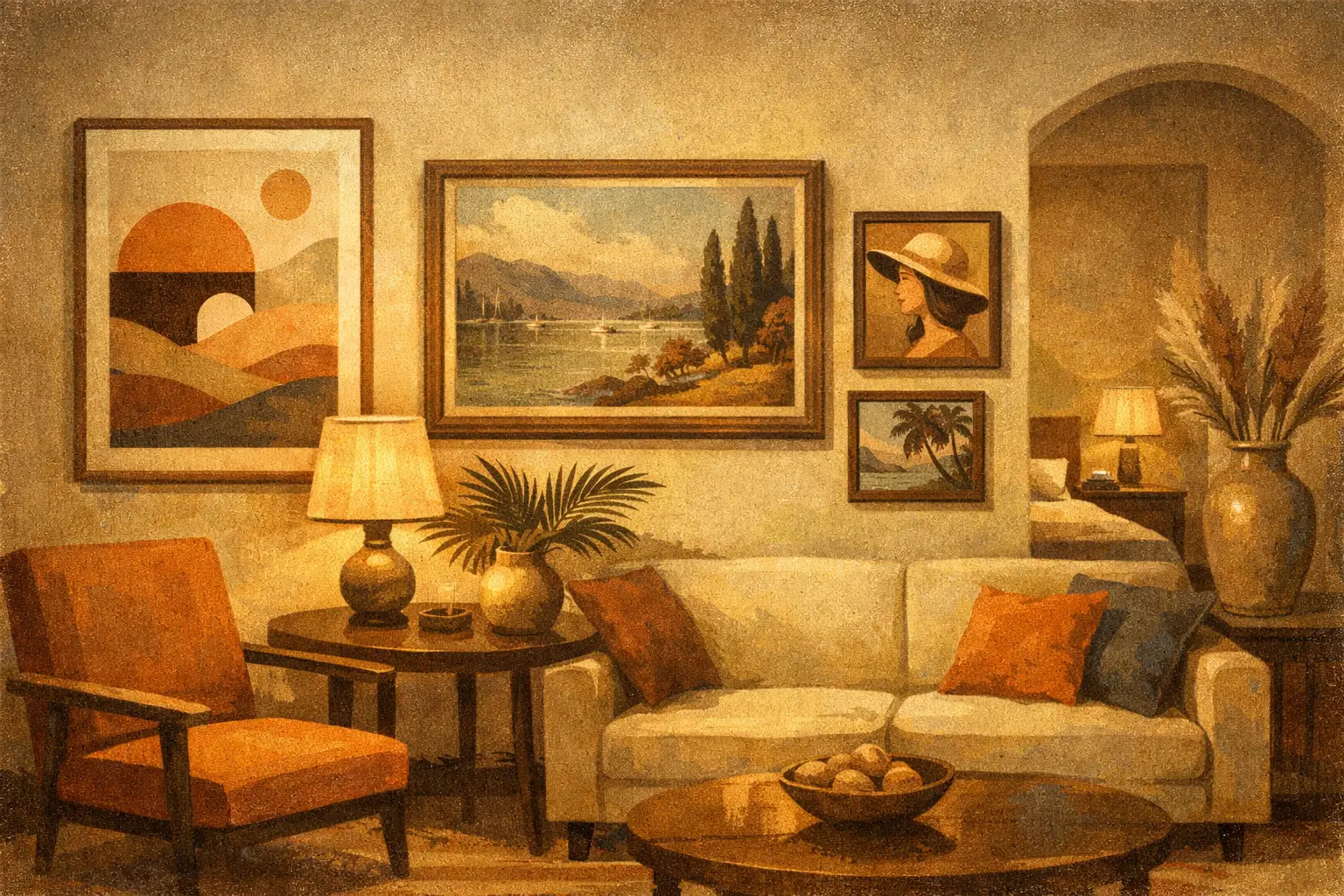
A boutique hotel is often remembered in fragments: the hush of the lobby at dusk, the texture of linen, the light across plaster, the artwork that seemed to hold the room together. That is why choosing the best wall art for boutique hotels is not a styling afterthought. It is part atmosphere, part identity, part guest experience.
In hospitality design, wall art does more than fill negative space. It sets emotional temperature. It can slow a guest down, sharpen a brand story, or create a subtle sense of place without relying on clichés. In a boutique setting, where every visual decision is meant to feel considered, the right artwork becomes one of the clearest signals that the hotel has taste, confidence, and a point of view.
What makes the best wall art for boutique hotels?
The answer is rarely a single style. The best wall art for boutique hotels is work that feels curated rather than purchased in bulk, distinctive without becoming distracting, and durable enough in mood to live with over time. Guests may only spend one or two nights in a room, but the impression is immediate. Art that feels generic can flatten the entire interior. Art that is too loud can overwhelm rest.
The strongest hotel art programs usually balance three things: visual coherence, emotional depth, and practical suitability. Coherence matters because boutique hotels depend on a recognizable atmosphere. Emotional depth matters because art is often what gives a room its inner life. Practical suitability matters because hospitality spaces need pieces that can be produced consistently, framed well, and installed across multiple rooms or public areas without losing refinement.
This is where original artworks, limited editions, and museum-quality Giclée prints often become especially valuable. They preserve a sense of authorship while allowing flexibility across a project. A hotel can maintain consistency in production quality while still avoiding the anonymous feeling of mass-market décor.
Start with atmosphere, not decoration
The most successful hospitality art selections begin with a question that is almost cinematic: how should the guest feel here?
A coastal boutique hotel may want calm rather than obvious beach references. A city property may want tension, rhythm, and modernity rather than predictable skyline imagery. A wellness-focused retreat may benefit from work that carries stillness, asymmetry, and space to breathe. Once the emotional direction is clear, the art choices become more intelligent.
Abstract art is often a strong answer because it leaves room for interpretation. It can create mood without dictating it. Soft tonal abstraction, gestural minimalism, or compositions shaped by Wabi-Sabi sensibility can bring quiet sophistication to guest rooms, corridors, lounges, and spa spaces. These works tend to age better than trend-driven imagery because they are rooted in feeling rather than novelty.
That said, abstraction is not the only path. Boutique hotels with a more narrative identity may use figurative work, conceptual photography, or culturally resonant graphic pieces. The trade-off is that representational art asks more from the viewer. Sometimes that is exactly right in a bar, restaurant, or gallery-like lobby. In a bedroom, it depends on the intensity of the image and the rest of the room.
The styles that tend to work best
Minimal and contemplative abstract art remains one of the safest and most elegant choices for boutique hospitality. These pieces offer visual structure while preserving calm. They work particularly well in projects where materiality already does much of the speaking – natural wood, stone, limewash, linen, bronze, smoked glass.
Textural works with an organic or weathered sensibility are equally compelling. Art informed by impermanence, erosion, emptiness, and natural imbalance can deepen a boutique hotel interior in a way polished decorative prints cannot. This is especially true for hotels leaning into Japandi, warm minimalism, desert modernism, or quiet luxury.
Black-and-white photography can also be effective, though it needs restraint. If the imagery is too literal or overly nostalgic, it can make a boutique property feel conceptually dated. The better approach is photography with atmosphere: architectural shadow, ambiguous landscape, or close-framed natural detail that leaves space for interpretation.
Large-format digital art and Giclée prints have become increasingly attractive for hospitality projects because they allow scale, consistency, and museum-quality finish. When the source work is genuinely strong, digital formats do not feel secondary. They feel precise, contemporary, and collectible. What matters is tonal richness, paper quality, framing, and the curatorial intelligence behind the selection.
Public spaces and guest rooms need different art
One common mistake is treating every wall in a hotel as if it needs the same visual energy. In practice, guest rooms and public spaces ask for different kinds of attention.
Guest rooms benefit from work that supports rest. That does not mean bland art. It means pieces with emotional steadiness – compositions that can hold presence without becoming mentally noisy. Gentle asymmetry, muted palettes, layered neutrals, earth tones, and open forms all tend to work well. Art above the bed should feel anchored. Art near a writing desk or seating area can be a touch more intimate or introspective.
Public spaces carry more expressive freedom. A lobby can accommodate scale, contrast, and a stronger conceptual statement because it functions as a first impression. Restaurants and bars often support bolder works, especially when the goal is memorability. Corridors benefit from rhythm and continuity rather than isolated spectacle. A series of related pieces often feels more intentional than a mix of unrelated images.
This distinction matters because boutique hotels are not private homes, even when they borrow the language of residential comfort. The art has to support movement, repetition, and multiple viewing distances.
Local relevance without becoming predictable
Many hospitality brands want art that reflects place. That instinct is right, but the execution often becomes obvious: landmarks, literal maps, or heritage references used too directly. Boutique hotels usually need something more nuanced.
Local relevance can appear through palette, material references, artistic collaboration, or thematic connection rather than straightforward depiction. A hotel in the Southwest might draw from mineral tones, dryness, and horizon lines rather than cactus imagery. A property in Kyoto-inspired interiors might favor emptiness, brush-like movement, and meditative balance rather than overt symbols.
Guests rarely remember art because it explained a destination to them. They remember it because it gave the destination a feeling.
Quality matters more than quantity
A boutique hotel does not need every wall to carry a statement piece. In fact, too much art can dilute the atmosphere. Better to place fewer works with conviction than to overcrowd a space with decorative filler.
This is where production standards become essential. Poor printing, weak framing, reflective glazing, and generic paper stock can diminish even a strong image. Museum-quality Giclée printing, thoughtful framing, and controlled palettes create quiet authority. They tell the guest that details were not rushed.
For designers and hoteliers, there is also a practical side. Hospitality projects need scalable sourcing, dependable fulfillment, and consistency across editions or room types. The ideal art partner can offer curatorial depth as well as production reliability. That balance is especially useful when a project needs collector-level feeling without the fragility or budget demands of placing only one-of-a-kind originals throughout.
How to choose wall art for a boutique hotel concept
Begin with the emotional identity of the property, then narrow by color environment, scale, and guest behavior. If the hotel relies on serenity, avoid art that feels too performative. If the brand is culturally adventurous, avoid safe choices that disappear into the background. Art should not compete with the architecture, but it should complete it.
Think carefully about scale. Undersized art is one of the fastest ways to make a room feel unresolved. Boutique hotels generally benefit from confident sizing, especially in lobbies, above beds, and in transition spaces. At the same time, very large work needs enough negative space around it to breathe.
It also helps to consider repetition. A single hero artwork may define the lobby, but guest room art often needs a family relationship rather than exact duplication. Variations within a shared mood – similar palettes, forms, or themes – can make the hotel feel curated instead of standardized.
For design-led buyers, this is where a gallery with a clear point of view becomes valuable. Taygeta Gallery, for instance, approaches art through atmosphere, philosophy, and museum-quality presentation, which aligns naturally with hospitality spaces that want more than decoration.
A final thought on memory
Guests may not recall the dimensions of a chair or the brand of a sconce. They will remember how a room made them feel when the door closed behind them. Art plays an unusually quiet role in that memory. It shapes stillness, sharpens identity, and gives the space a pulse beneath the surface. The best choice is rarely the most obvious piece. It is the one that lets the hotel linger in the mind after checkout.
Leave a Reply