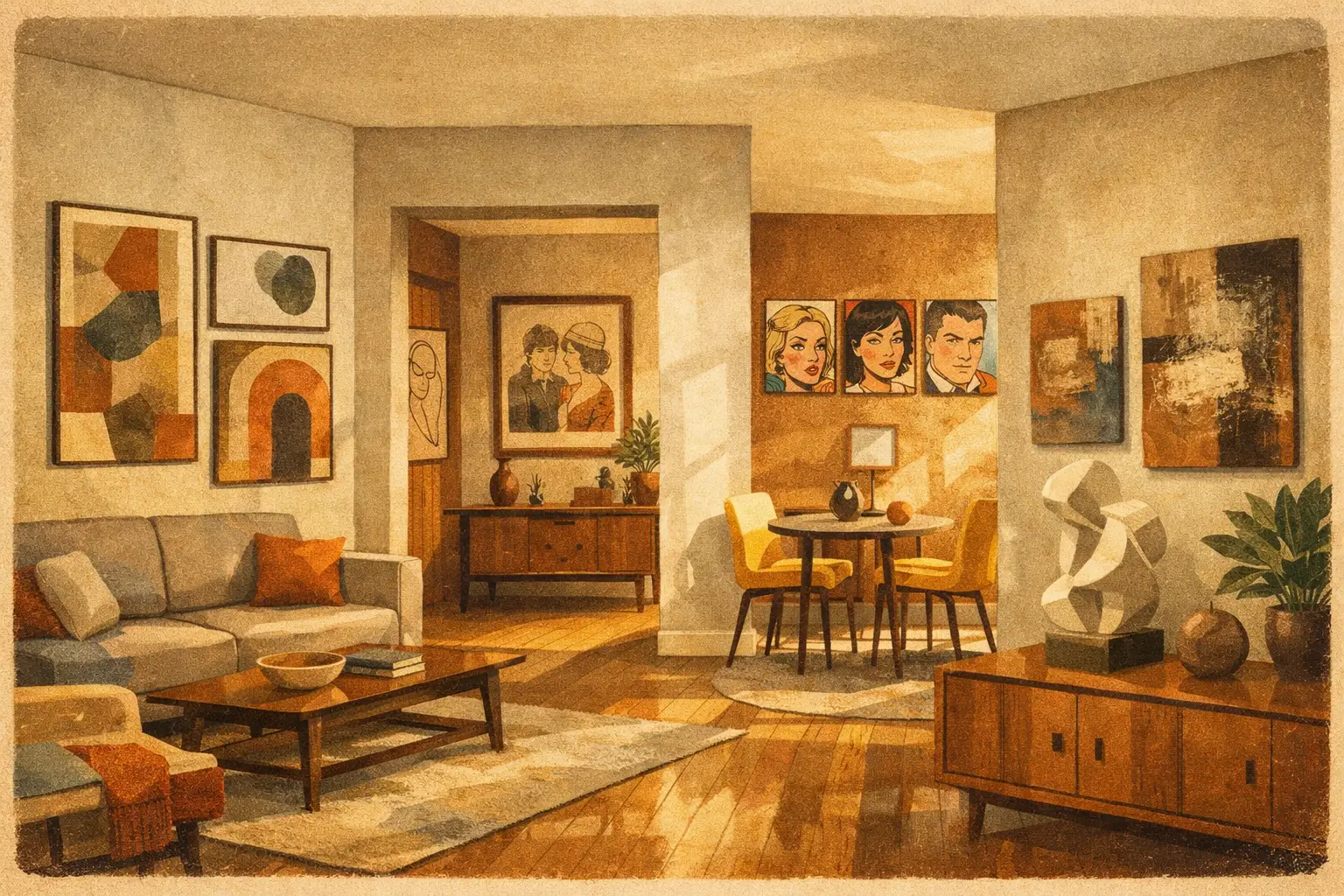
A small entry wall can carry more atmosphere than an entire room of furniture. In apartments, every surface works harder. Art is not a finishing touch in that setting. It is often the element that gives a compact home its emotional center.
The best art styles for apartments are the ones that respect scale, light, and rhythm while still allowing the space to feel personal. That does not always mean small art for small rooms. More often, it means choosing a visual language that brings clarity rather than noise, depth rather than clutter, and presence without heaviness.
What makes art work in an apartment
Apartment living asks for sensitivity. Walls may be limited, ceilings may be lower, and natural light can shift dramatically from one room to the next. A work that feels expansive in a loft can feel overbearing in a narrow city rental. At the same time, art that is too timid tends to disappear into the background.
This is why style matters as much as size. The right style shapes how a room breathes. It can soften hard architectural lines, create calm in an open-plan layout, or introduce contrast in a monochrome interior. For many apartment dwellers, the most successful pieces are the ones that hold attention quietly.
Best art styles for apartments with modern interiors
Minimalist abstract
Minimalist abstract art is one of the most reliable choices for apartment interiors because it creates mood without overfilling the room. Broad fields of color, restrained composition, and controlled gesture offer visual rest. In a home where the kitchen, dining area, and living space may all be visible at once, that restraint matters.
This style works especially well in contemporary apartments with clean-lined furniture, natural textures, and neutral palettes. Soft tonal abstraction in sand, charcoal, off-white, muted black, or clay can unify a space without making it feel staged. If your apartment already contains strong materials like marble, concrete, or dark wood, minimalist abstract art often provides the right counterbalance.
There is a trade-off, though. If everything in the room is understated, the result can become too quiet. In that case, look for abstract work with a single moment of tension – a dense brushstroke, a fractured line, a surprising accent of rust or indigo.
Wabi-sabi and Zen-inspired art
For apartments, few aesthetics feel as naturally suited as wabi-sabi. This philosophy values impermanence, asymmetry, weathered beauty, and the subtle dignity of restraint. In visual terms, that can mean textured surfaces, organic forms, earthy palettes, and compositions that leave space for silence.
Why does this matter in an apartment? Because apartments often benefit from art that slows the room down. Wabi-sabi and Zen-inspired works bring softness to compact layouts and reduce the pressure to decorate every corner. They pair beautifully with linen, pale wood, stone, matte ceramics, and the kind of interior styling that favors fewer but better objects.
This style is particularly compelling for bedrooms, reading corners, and living rooms where the goal is not display alone, but restoration. Taygeta Gallery has built much of its curatorial identity around this sensibility, and for good reason – it answers a desire many design-minded buyers feel but cannot always name.
Organic contemporary line work
Line-based contemporary art has a quiet intelligence that suits apartment life. Whether figurative or abstracted, it introduces structure without visual weight. A black ink drawing, a fluid contour composition, or a minimal face study can animate a wall while preserving openness.
This style is useful in tighter areas such as hallways, breakfast nooks, and home office corners, where heavier imagery may feel compressed. It also layers well in gallery walls because line work tends to create continuity even when multiple pieces are grouped together.
The key is proportion. In apartments, delicate line work can look sophisticated, but if the piece is too small, it reads as apologetic. Give it enough scale or enough framing presence to hold the wall with confidence.
Choosing by mood, not just by trend
Soft landscape and atmospheric nature works
Not every apartment has access to a view. Art can answer that absence. Atmospheric landscapes, blurred horizons, botanical abstractions, and meditative nature studies open a room psychologically, even when the square footage remains the same.
These works are especially effective in urban apartments with limited greenery or strong exposure to neighboring buildings. A mist-toned seascape, a sparse mountain composition, or a contemporary interpretation of natural forms can introduce distance and breath.
Still, not all landscape art fits modern apartment interiors. Traditional pastoral scenes in heavy palettes can feel too ornamental unless the room itself leans classic. For more contemporary homes, look for nature-based works that are simplified, textural, or slightly abstracted.
Surrealism and dreamlike figurative art
Some apartments need calm. Others need character. Surreal or dreamlike figurative art can be the answer when a space feels visually polite but emotionally unfinished. A compelling figurative work gives an apartment interior a point of view. It suggests that the home is not only styled, but inhabited by a distinct imagination.
This style works well when the rest of the room is disciplined. If your furniture is minimal and your palette controlled, a surreal image or psychologically rich figure can create a memorable focal point. It draws the eye and invites repeat viewing, which matters in smaller homes where you live in close conversation with your art.
The trade-off is intensity. Strong figurative pieces can dominate a room, especially in studio apartments or open layouts. That is not a flaw, but it should be intentional. If you want emotional drama, give it space. If you want background harmony, choose a gentler visual language.
Graphic monochrome photography and digital art
For apartments with a sharper architectural edge, monochrome photography and refined digital art often feel exact. They echo the precision of contemporary interiors and can make modest spaces feel edited rather than crowded.
Black-and-white compositions, architectural studies, shadow-driven imagery, and digitally composed abstract works all bring clarity. They are particularly effective in homes that lean modern, industrial, or gallery-like. Framed properly, they create clean punctuation on a wall.
But precision can turn cold if overused. A room filled only with hard-edged monochrome work may lose warmth. Balance it with tactile materials – wool, oak, plaster, hand-thrown ceramics – so the art sharpens the space without flattening it emotionally.
How scale changes everything
One of the most common mistakes in apartment decorating is choosing art that is too small. People worry about overwhelming the room, so they under-scale. The result is often the opposite of elegance. Small, scattered pieces can make walls feel busier and rooms feel less resolved.
In many apartments, one substantial piece does more than several minor ones. A large abstract over a sofa, an elongated vertical piece in a dining nook, or a commanding work in an entry can create coherence quickly. If you prefer multiple works, keep a common thread – palette, framing, medium, or mood.
Museum-quality prints can be especially useful here. They make stronger scale accessible and allow renters or first-time collectors to choose work with real visual impact rather than settling for generic filler.
The best art styles for apartments by room
The living room usually supports the widest range. Abstracts, landscapes, and statement figurative pieces all work there because the room can carry more presence. In bedrooms, softer abstractions, wabi-sabi textures, and calm tonal works tend to feel more restorative.
For dining areas, consider art with line, movement, or subtle contrast – something that adds energy without becoming loud. Hallways and entries often benefit from vertical works, monochrome compositions, or smaller curated groupings that establish a mood immediately.
Bathrooms and kitchens can hold art too, but style matters less there than framing and placement. Choose works that can tolerate visual competition from tile, hardware, and cabinetry.
Buy with the room you have, not the fantasy one
It is easy to fall for art in isolation. A piece may be beautiful on a white screen and wrong for the life of your apartment. Before choosing, consider how the work will feel in morning light, at night under lamps, from the sofa, and in passing. Art in an apartment is rarely viewed from a ceremonial distance. It becomes part of your daily rhythm.
That is why the best choices are often the ones that remain interesting after the first impression. They do not shout for attention every time you enter the room. They deepen slowly. They give the space shape, but they also give it feeling.
If you are deciding where to begin, begin with the atmosphere you want to live inside. Calm, tension, softness, introspection, clarity – each points toward a different visual language. The right artwork does not just fit the wall. It teaches the room how to breathe.
Leave a Reply